
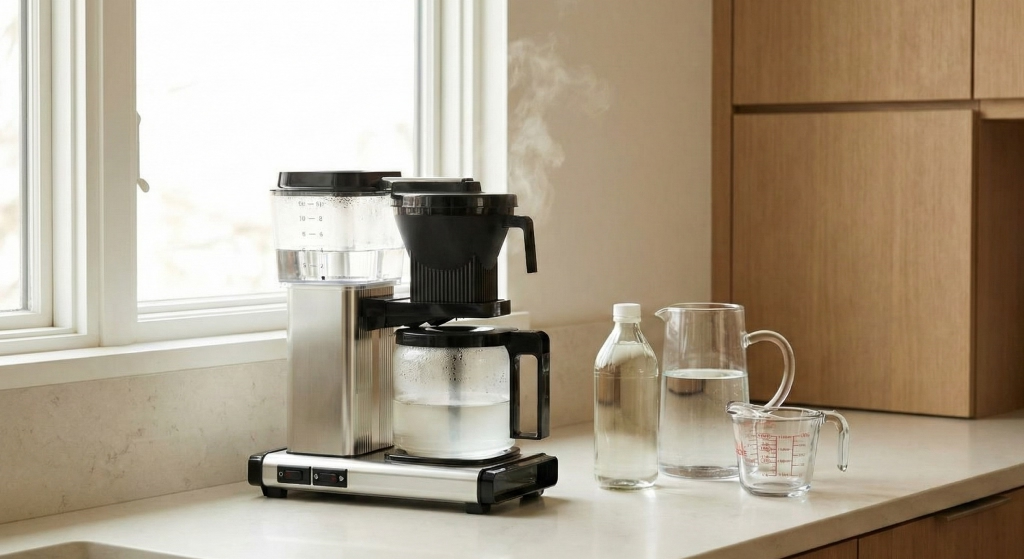
The Analyst Warning: Why “Just Use Vinegar” Is Outdated Advice
If you search *how to clean a coffee maker*, you’ll see the same advice everywhere: “Just run vinegar through it.”
That advice is incomplete and in many cases, harmful to your machine.
As an expert coffee technician and industrial chemist, here’s the problem:
The Vinegar Risk (Acetic Acid)
Rubber seal degradation: Acetic acid slowly attacks rubber gaskets, O-rings, and hoses when used repeatedly.
Lingering odor & taste: Vinegar has high vapor pressure, meaning the smell embeds into plastic tubing and reservoirs.
False “clean” feeling:** Vinegar dissolves scale, but leaves behind odor-causing residues that require excessive rinsing.
That’s why so many people complain:
“My coffee tastes like plastic or vinegar even after cleaning.”
The Analyst Solution: Citric Acid
Citric acid is what professionals use when they care about machine longevity.
Odorless (or very mild citrus scent)
~3× more effective at dissolving calcium carbonate scale
Safer for rubber seals and internal components
Rinses clean without lingering taste
If your goal is a clean coffee maker that lasts, vinegar should not be your default.
The Science of Descaling: What’s Actually Inside Your Coffee Maker
Coffee makers don’t get “dirty” — they get **chemically fouled**.
The Two Real Problems
1. Calcium Carbonate Scale (CaCO₃)
Hard water leaves mineral deposits that reduce brew temperature, clog flow paths, and ruin flavor.
2. Biofilm in the Reservoir & Tubing
Warm, wet environments allow bacteria and mold to form invisible slime layers — especially in rarely emptied tanks.
Acetic Acid vs. Citric Acid vs. Lactic Acid
Acetic Acid (Vinegar)
Weak organic acid
Dissolves scale, but slowly
High odor retention
Aggressive toward rubber over time
Citric Acid
Triprotic acid (more reactive per molecule)
Acts as a chelating agent, binding minerals efficiently
Low odor, excellent rinsability
Industry standard for safe DIY descaling
Lactic Acid (Commercial Descalers)
Very material-safe
Often buffered and inhibited
Slightly weaker alone, but optimized in branded products
Bottom line:
Vinegar works.
Citric acid works better and safer.
The Universal Analyst SOP: How to Clean a Coffee Maker Without Vinegar
This protocol answers the most important modern search intent:
**how to clean coffee maker without vinegar**
Citric Acid Descaling Recipe
2 tablespoons food-grade citric acid
1 liter (34 oz) warm water**
Step-by-Step Method
1. Dissolve citric acid completely in warm water
2. Pour into the water reservoir
3. Brew half the machine (no coffee, no pod)
4. Pause and soak for 20 minutes
5. Finish the brew cycle
6. Rinse with fresh water twice
This method:
Removes scale
Flushes biofilm
Leaves zero residual odor
Preserves seals and tubing
Brand-Specific Maintenance (High-Value Search Targets)
How to Clean a Keurig Coffee Maker
Descaling alone is not enough.
Critical extra step: Exit Needle Cleaning
Unplug machine
Remove pod holder
Use a straightened paperclip to gently clear the exit needle
Rinse thoroughly
Important warning:
Vinegar is known to trigger odor retention and sensor issues in some Keurig 2.0 models. Citric acid is the safer option.
How to Clean a Ninja Coffee Maker (Ninja Coffee Bar)
Use the citric acid protocol above
If the Clean Light stays on:
* Unplug the machine for 60 seconds
* Run a full fresh-water brew cycle
* This flushes trapped solution and resets internal sensors
How to Clean a Bunn Coffee Maker
Bunn machines contain a velocity tank that holds hot water continuously.
Symptoms of scale buildup:
“Burnt popcorn” smell
Bitter or flat coffee
Best practice:
Run citric acid solution through the machine
Use the Bunn deliming spring if your model supports it
Follow with multiple rinse cycles to fully clear the tank
The Vinegar Compromise (If You Insist on Using Vinegar)
If you specifically want **how to clean a coffee maker with vinegar**, here’s the **least damaging** method.
Safe Vinegar Ratio
50% white vinegar
50% water
Never use full-strength vinegar.
Mandatory Neutralization Flush
This step is **not optional**.
1. Run the vinegar cycle
2. Empty and rinse reservoir
3. Run a baking soda flush:
2 teaspoons baking soda per 1 liter water
4. Finish with 1–2 plain water cycles
This neutralizes leftover acetic acid and removes odor.
Use a 50/50 vinegar-to-water mix. Stronger concentrations increase seal damage and odor retention.
Use citric acid (2 Tbsp per 1 liter warm water) or a commercial lactic-acid descaler.
Residual acetic acid from vinegar embeds into plastic tubing and reservoirs. Extra rinses or a baking soda neutralization flush are required.
Final Analyst Verdict
Vinegar is outdated, aggressive, and odor-prone
Citric acid is the safest DIY descaling agent
Machine longevity = correct chemistry, not folk advice
If you care about taste, performance, and lifespan:
Stop using vinegar as your default.
Related Articles

Share your coffee experience
Have you tried this product? Add a thoughtful review or ask a question.
2 Responses