Executive Summary: The Death of the Hopper
In our 2026 market analysis, a singular trend has defined the US coffee landscape: the death of the hopper. For decades, the standard home setup involved filling a plastic reservoir with a pound of beans and grinding on demand. Our data indicates this methodology has collapsed. The modern American enthusiast has shifted decisively toward single-dosing—weighing individual doses to maximize freshness and minimize waste.
This shift has created a vacuum that legacy manufacturers failed to fill quickly enough, allowing agile newcomers to dominate. Specifically, the introduction of the **Turin DF54** acted as a “Category Killer.” By offering flat burr geometry and plasma generator technology at an entry-level price point, it rendered the traditional lineup of plastic conical grinders largely obsolete in terms of performance-to-value.
Below, we present our findings for the current fiscal year. We have ranked these models not just on raw particle distribution, but on the “Liveability Metrics”—noise, retention, and workflow speed.
The Market Disruptor: Turin DF54 ($249)
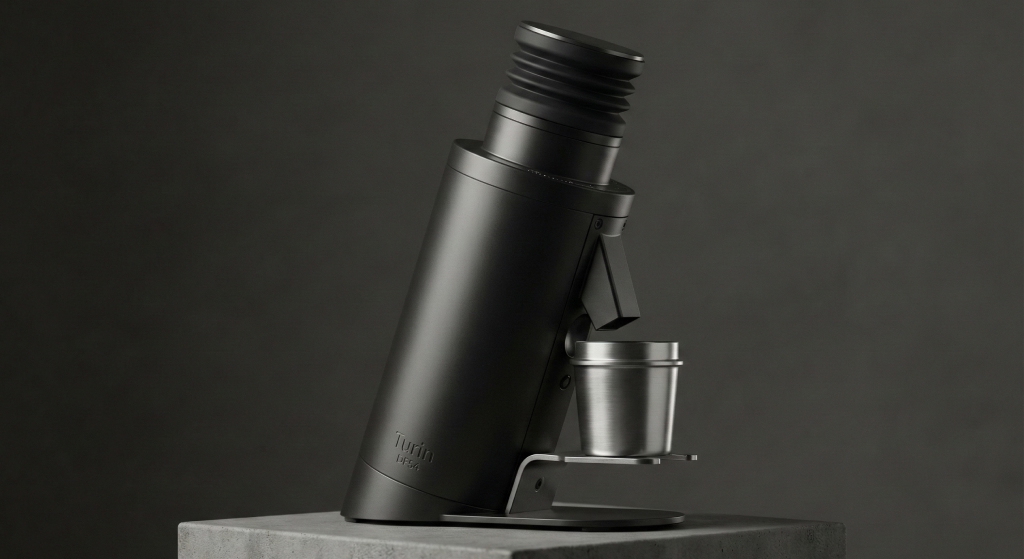
Verdict: The new default for beginners.
Our testing confirms that the Turin DF54 grinder is currently the highest-value proposition in the espresso hardware sector. Historically, entry-level buyers were forced into conical burrs which, while capable, lack the flavor separation preferred for modern light-roast espresso. The DF54 disrupts this tier by offering 54mm flat burrs for the price of a standard plastic conical unit.
Data Analysis:
The standout feature in our lab tests was the integrated ionizer (plasma generator). In 2026, static cling is an unacceptable flaw. The Turin DF54 coffee grinder utilizes this technology to neutralize static charge at the chute, resulting in retention rates consistently below 0.1g without the need for the Ross Droplet Technique (RDT).
However, prospective buyers must note the acoustic profile. Our sensors recorded a noise floor of approximately 90dB under load. While the Turin DF54 delivers flavor clarity previously reserved for the $500+ bracket, it does so loudly.
The Enthusiast Benchmark: Turin DF64 Gen 2 ($399)
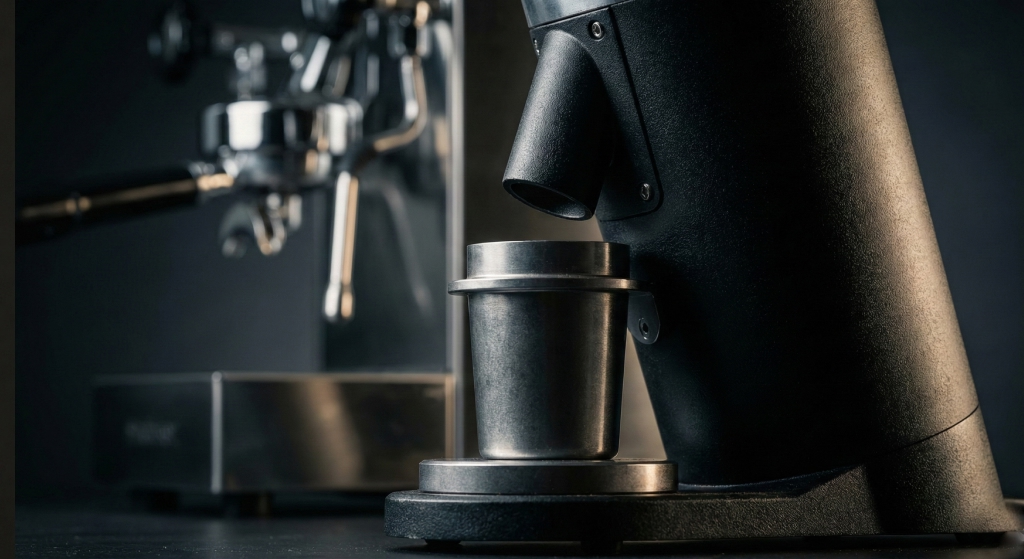
Verdict: For the user who wants to tinker and upgrade later.
If the DF54 is the entry point, the DF64 Gen 2 is the gateway to the high-end. We rank this model second because it offers a modular platform for the serious hobbyist. While it shares design DNA with its smaller sibling, the 64mm burr chamber is the industry standard for aftermarket upgrades.
Data Analysis:
The Gen 2 solved the messy workflow issues of its predecessors by implementing a fixed Plasma Generator. In our retention stress tests, it performed nearly identically to the DF54. The value here lies in the ecosystem; users can swap stock burrs for SSP variants later, drastically altering the flavor profile without buying a new machine. For the user prioritizing future-proofing over initial cost, this is the logical choice.
The Quiet Classic: Eureka Mignon Specialita ($400+)
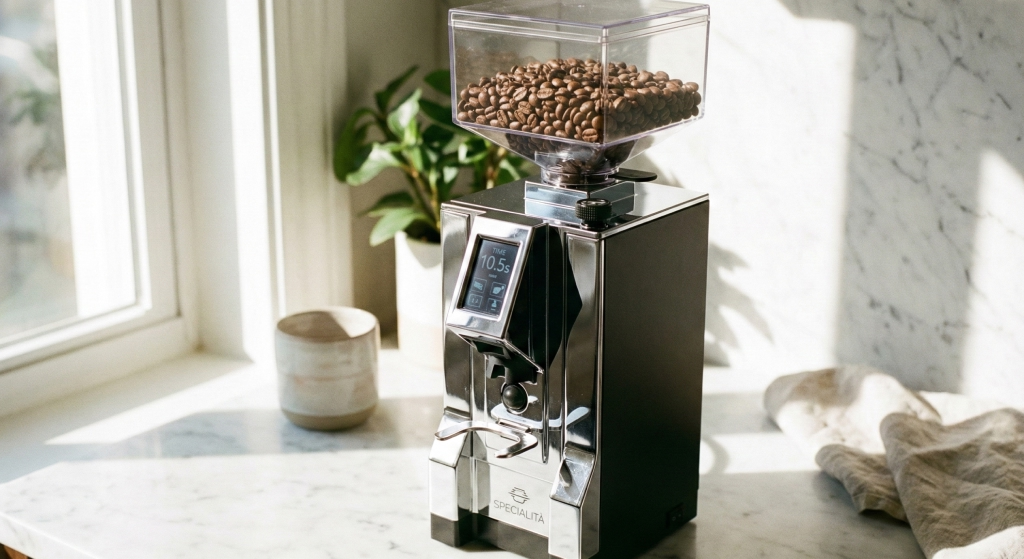
Verdict: For the user who wants “Set it and forget it” silence.
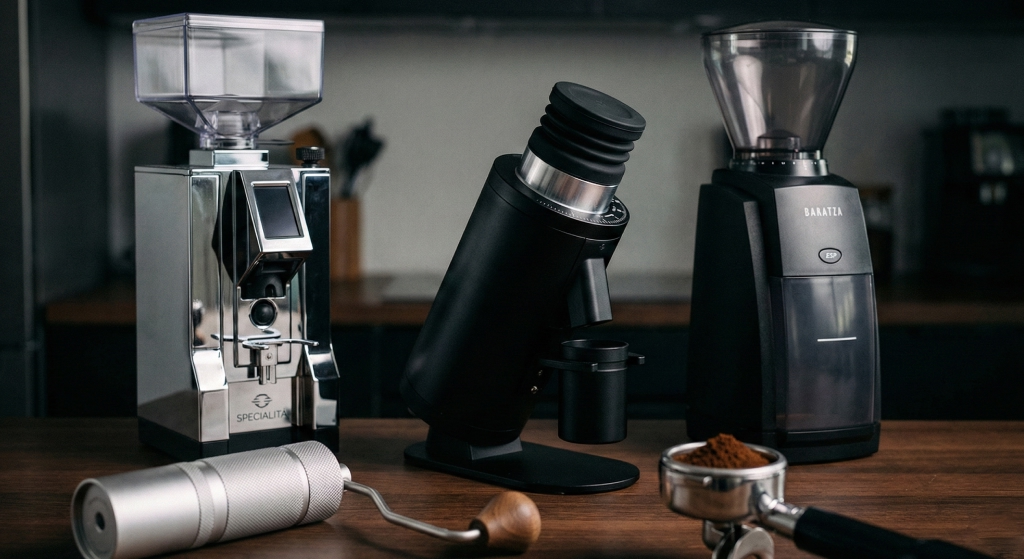
The Eureka Mignon Specialita espresso grinder remains a staple in our index due to its build quality. Weighing in like an “Italian Tank,” it offers a user experience distinct from the utilitarian Turin line. It is the refined, aesthetic choice for traditionalists.
Data Analysis:
The Specialita’s competitive advantage is acoustic comfort. We measured an operating volume of 78.9 dB, making it significantly quieter than the competition. It is a whisper-quiet operator.
However, its flaws are becoming harder to overlook in 2026. Designed originally as a hopper-based grinder, it lacks stock bellows, leading to higher retention when single-dosing. Furthermore, the tiny adjustment dial makes switching brew methods frustrating. If you drink the same dark roast every morning, the **Eureka Mignon Specialita** is excellent. If you change beans daily, the workflow lags behind the market.
The Safe Bet: Baratza Encore ESP ($199)
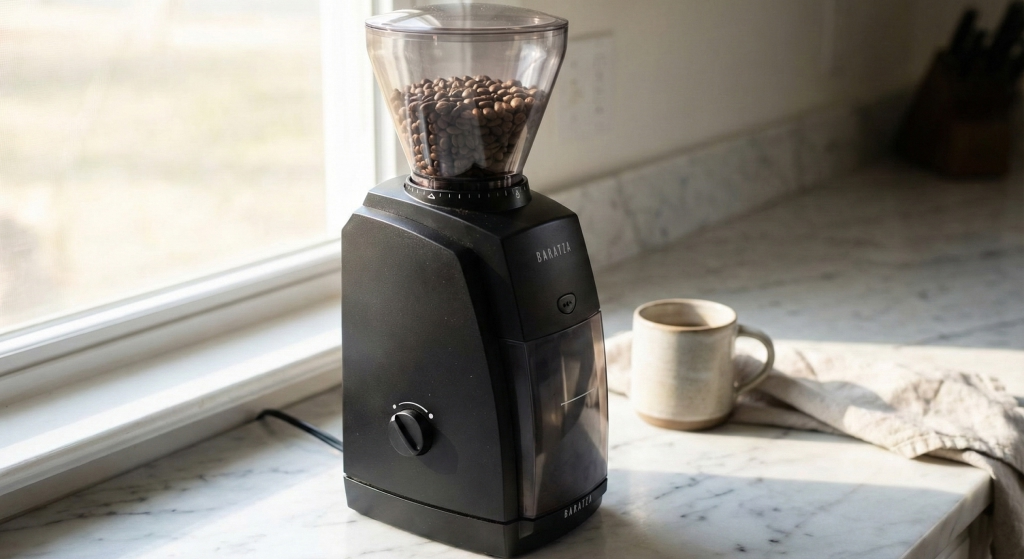
Verdict: Buy this if you want a machine that lasts 15 years and is easy to fix.
The Baratza Encore ESP holds the fourth spot as the legacy defender. While it lacks the flat burrs of the Turin line, it possesses an unmatched infrastructure of support. We recommend the Baratza Encore coffee grinder series to users who prioritize longevity and right-to-repair over flavor separation.
Data Analysis:
The unit utilizes the M2 conical burr, which produces a high-texture, heavy-bodied shot of espresso—ideal for milk drinks but less clear for straight espresso than flat burrs.
The “Liveability” scores were mixed. Without an ionizer, the Baratza Encore ESP suffers from high static and retention, often requiring a sharp tap to clear the chute. It was also the loudest in our test group at ~92 dB. However, the ecosystem is the selling point. Baratza Encore parts are ubiquitous, and the support team is legendary. Whether you need a new hopper or are looking to calibrate your Baratza Encore grind settings, the resources are endless. For a utilitarian encore baratza burr grinder that will simply work for a decade, this remains the safe bet.
The Manual Cheat Code: 1Zpresso J-Ultra ($199)
Verdict: For the traveler or the budget-conscious perfectionist.
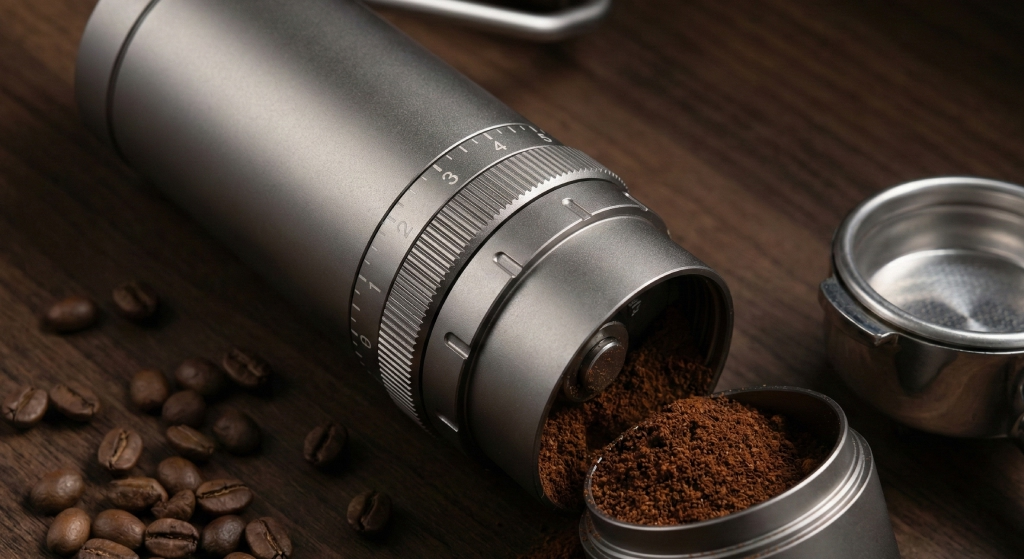
Coming in at number five is a reminder that electricity is a luxury, not a requirement for quality. The 1Zpresso J-Ultra offers a particle distribution quality comparable to $1,000 electric units, provided you are willing to supply the torque.
Data Analysis:
This is the most precise instrument on our list, featuring an external adjustment ring with 8-micron steps. This allows for dialing in espresso with granularity that even the Specialita cannot match. It is silent, portable, and retains effectively zero coffee. We recommend this strictly for the traveler or the enthusiast on a budget who refuses to compromise on grind consistency.
Comparative Data Table
| Model | Price (USD) | Burr Type | Noise Level (Load) | Mess Factor (Ionizer) |
|---|---|---|---|---|
| Turin DF54 | $229 | 54mm Flat | 90 dB | Low (Yes) |
| Turin DF64 Gen 2 | $399 | 64mm Flat | ~88 dB | Low (Yes) |
| Eureka Mignon Specialita | $400+ | 55mm Flat | 78.9 dB | High (No) |
| Baratza Encore ESP | $199 | 40mm Conical (M2) | 92 dB | High (No) |
| 1Zpresso J-Ultra | $199 | 48mm Conical | 0 dB | Zero (Manual) |
Final Analyst Advice
The data from our 2026 index draws a definitive line in the sand regarding workflow technology. We are officially declaring this the “Year of the Plasma Generator.”
In previous years, we tolerated static and retention as the cost of doing business at home. With the advent of the Turin DF54 and the DF64 Gen 2, that compromise is no longer necessary. If a grinder requires you to spray your beans with water (RDT) or violently tap the unit to get your full dose out, it is functionally outdated technology.
For the vast majority of US consumers entering the hobby, the choice is between the raw value and messy workflow of the Baratza Encore legacy platform, or the modern, clean, flat-burr performance of the Turin series. Our analysis suggests the market has already made its choice.