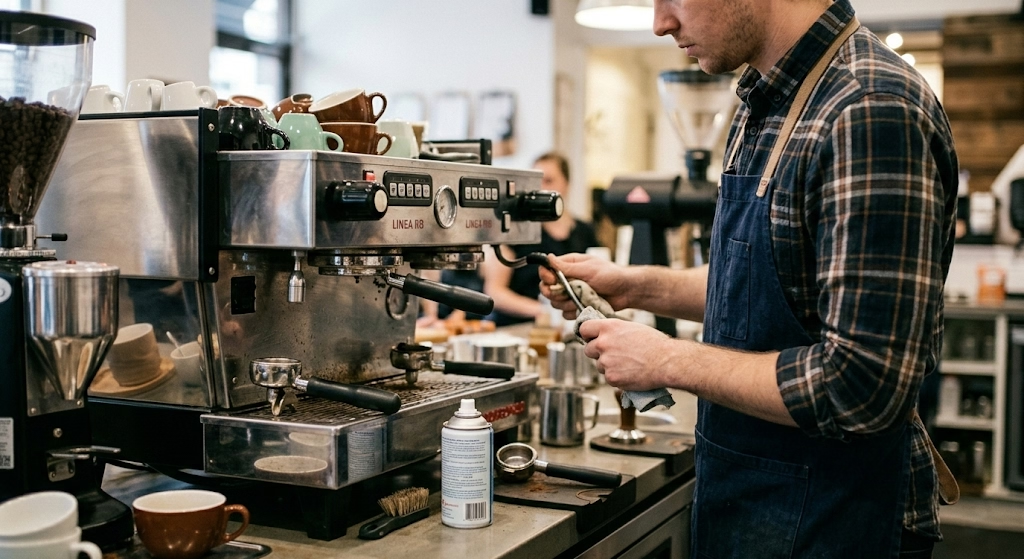
Commercial espresso machines are production equipment. A consistent maintenance routine reduces downtime, protects beverage quality, and extends component life (gaskets, solenoids, screens, valves, and pumps).
This SOP-style checklist is written to match how cafés actually operate: clear task ownership, time estimates, and frequency-based scheduling.
Shopping for a new machine (or replacing an aging unit)? See our pillar guide: Best Commercial Espresso Machines (2026 Guide) for machine selection, capacity, and reliability considerations.
Quick Printable Commercial Espresso Machine Maintenance Checklist
Print this section and keep it at the espresso bar. This is designed as a close-down checklist (and can also be used for opening checks).
| Task | Responsible | Time Required | Completed |
|---|---|---|---|
| Backflush group heads with water | Barista | 1 min | ☐ |
| Clean and rinse portafilters | Barista | 2 min | ☐ |
| Purge and wipe steam wands | Barista | 30 sec | ☐ |
| Clean drip tray and drain box | Barista | 2 min | ☐ |
| Wipe exterior and control panels | Barista | 1 min | ☐ |
| Check for leaks or abnormal sounds | Shift Lead | 1 min | ☐ |
Commercial Espresso Machine Maintenance Schedule (Overview)
Use this table as your master cadence. It prevents “only clean when it gets bad” behavior—the #1 cause of service calls and shot inconsistency.
Maintenance Frequency Table
| Frequency | What you do | Owner | Prevents |
|---|---|---|---|
| Daily | Water backflush, steam wand purge/wipe, rinse portafilters, clean drip tray | Barista | Rancid oils, milk blockage, hygiene issues |
| Weekly | Detergent backflush, soak portafilters/baskets, shower screen clean, steam tip soak | Shift Lead + Barista | Stuck solenoids, restricted flow, bitter taste |
| Monthly | Inspect gaskets/screens, check for leaks, verify water filtration status, basic performance checks | Manager + Shift Lead | Unexpected failures, degraded extraction |
| Quarterly | Water hardness verification, evaluate scale risk, planned parts replacement as needed | Manager | Scale buildup, boiler efficiency loss |
| Annual | Technician preventative service (pressure calibration, safety inspection, internal cleaning) | Technician | Major downtime, expensive repairs |
High-volume cafés (150–300+ drinks/day): treat weekly tasks as “2x per week” and monthly inspections as every 2–3 weeks.
Daily Espresso Machine Cleaning Checklist
These are the minimum tasks for commercial environments. Train new staff on this on day one.
Backflush group heads with water (end of day)
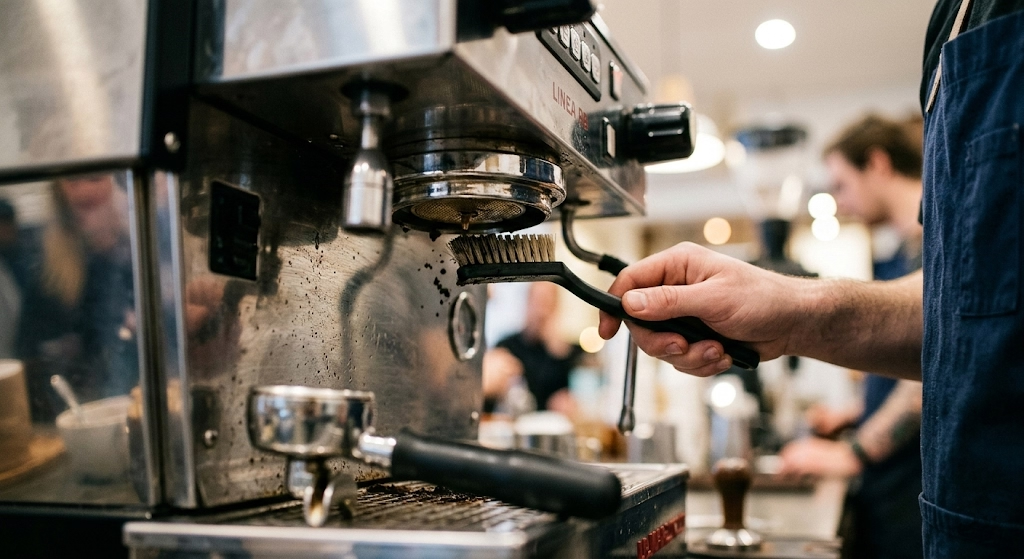
Tools: blind basket (backflush basket)
Steps
- Insert blind basket into portafilter.
- Lock into the group head.
- Run brew cycle for 8–10 seconds, stop.
- Wait 2–3 seconds.
- Repeat 5 cycles per group.
- Remove portafilter, run brew water for 5 seconds to rinse the group.
Done when: discharge water runs clear and no oily foam appears.
Clean and rinse portafilters and baskets
Steps
- Knock out puck, rinse basket immediately.
- Brush underside of basket and portafilter spouts (if applicable).
- Rinse again with hot water.
- Leave portafilters locked in (or staged per your bar SOP) to keep group area sealed and ready.
Done when: no visible oils or grounds; basket holes unobstructed.
Purge and wipe steam wands (after every drink + end of day)
Non-negotiable rule: Purge before and after steaming to prevent milk from being drawn back into the wand.
Steps (close-down)
- Purge steam wand for 2 seconds.
- Wipe wand with a dedicated sanitized cloth.
- Purge again for 2 seconds.
- Confirm steam tip holes are open.
Done when: wand surface is clean, holes clear, steam output normal.
Clean drip tray, grate, and drain components
Steps
- Remove tray and grate.
- Rinse with hot water.
- Wash/sanitize per local health requirements.
- Inspect drain line connection (if plumbed) for clogs or odors.
Done when: no standing liquid residue; drain path clear.
Brush group head area (under gasket lip)
Steps
- Run a short water flush (2–3 seconds).
- Use a group head brush to clean under the gasket and around the group.
- Flush again to rinse away loosened grounds.
Done when: no loose grounds remain around the gasket and screen area.
Quick inspection and logging (shift lead)
Look for
- Water pooling under machine
- New rattling/whining from pump
- Weak steam output
- Error lights or unusual temps
- Shots pulling significantly faster/slower than baseline
Action
- Log issues in a shared maintenance log.
- If any “stop now” sign appears (see section below), remove machine from service and call a technician.
Weekly Espresso Machine Maintenance Tasks
Weekly cleaning is where you prevent most service calls: sticky solenoids, bitter flavor carryover, and restricted flow.
Detergent backflush (deep cleaning)
Tools: espresso machine detergent (commercial-grade), blind basket
Steps
- Add detergent to blind basket per product instructions.
- Lock into group head.
- Run brew cycle 10 seconds ON / 10 seconds OFF, repeat 5 cycles.
- Remove portafilter and rinse it thoroughly.
- Rinse backflush: repeat water-only backflush cycles until discharge runs clear and detergent is fully flushed.
- Pull and discard 1–2 “seasoning shots” per group (or flush thoroughly if your SOP avoids wasting coffee).
Done when: no detergent foam remains; shots taste clean (no chemical notes).
Common operator error: insufficient rinse cycles after detergent use.
Soak portafilters and baskets
Steps
- Remove baskets from portafilters.
- Soak metal parts in hot water + detergent solution (avoid soaking handles if not rated).
- Scrub, rinse, and dry fully before reinstalling.
Done when: metal is free of coffee oils (no slick residue).
Remove and clean shower screens
Steps
- Remove shower screen (and dispersion plate if accessible) per manufacturer spec.
- Soak in detergent solution.
- Brush screen holes gently.
- Rinse thoroughly and reinstall.
Done when: screen holes are open and free of buildup; water flow is uniform.
Deep clean steam tips
Steps
- Remove steam tip (if removable).
- Soak tip in approved solution.
- Clear holes with appropriate tool (do not deform openings).
- Reinstall and test steam flow.
Done when: steam flow is strong and evenly distributed.
Monthly Preventative Maintenance
Monthly work is about wear items + early detection. Assign this to a manager or shift lead with accountability.
Inspect group head gaskets
What to check
- Cracking, flattening, or tearing
- Portafilter no longer locks at the normal “6 o’clock” position
- Water leaking around portafilter during extraction
Action
- Schedule gasket replacement if any of the above appear.
Inspect shower screens and dispersion components
What to check
- Warping, clogged holes, uneven flow
- Coffee deposits that return quickly after weekly cleaning
Action
- Replace screens showing repeated clogging or deformation.
Check machine for leaks and heat-related wear
What to check
- Under-machine water traces
- Moisture near fittings
- Steam wand valve seepage
- Unusual heat discoloration on panels
Action
- Log and schedule service before it becomes downtime.
Basic performance verification (10-minute check)
Check
- Is steam pressure consistent across the shift?
- Are shot times stable with the same recipe and grind baseline?
- Is water flow even from each group?
Action
- If one group behaves differently, prioritize screen/gasket inspection and schedule a technician if the problem persists.
Quarterly & Annual Espresso Machine Servicing
Quarterly: water condition and scale risk verification
Even if you have filtration, water conditions can drift as cartridges exhaust.
Quarterly checks
- Confirm filter/softener replacement schedule is being followed
- Verify water hardness (test strip or meter)
- Review maintenance log for repeating symptoms (slow flow, bitter taste, weak steam)
Annual: professional technician preventative service
Assign annual servicing to a qualified technician (especially for plumbed multi-group machines).
Typical technician service items
- Pump pressure calibration
- Boiler and heating system inspection
- Valve and solenoid evaluation/cleaning
- Safety checks (electrical, over-pressure, temperature stability)
- Internal inspection for scale and corrosion risk
Operational best practice
- Schedule service during the lowest-volume week.
- Keep spare gaskets/screens on-site to avoid waiting on parts.
Water System Maintenance for Commercial Espresso Machines
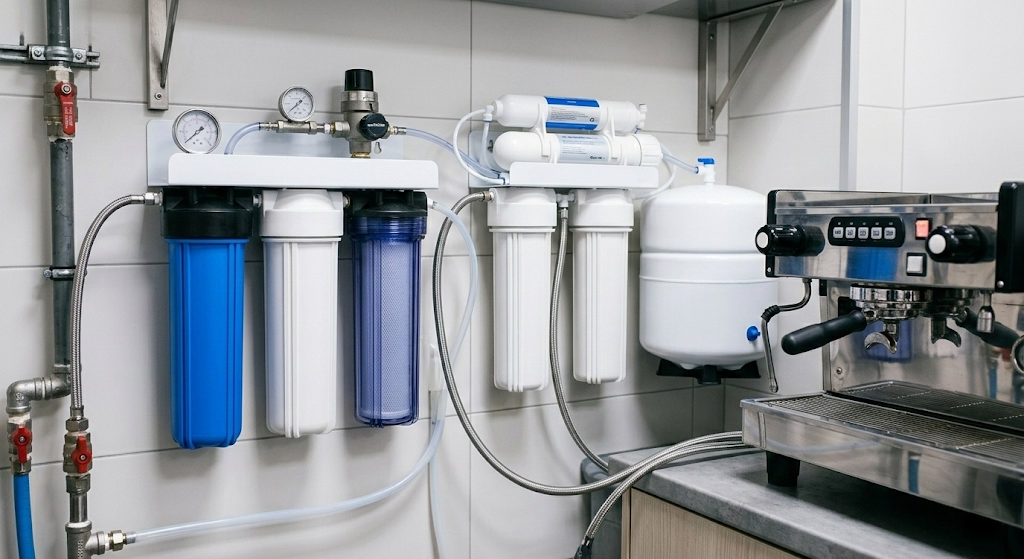
Water is the most common root cause behind scale, inconsistent temperature performance, and premature component wear.
Why water filtration matters
Filtration and conditioning protect:
- boilers and heating elements
- valves and solenoids
- shot consistency and taste
Water hardness and scale risks
If hardness is high, scale accumulates faster. That drives:
- higher energy use
- restricted flow
- temperature instability
- increased failure risk
Practical rule: if your hardness is unknown, treat it as a risk and begin quarterly testing immediately.
When to replace water filters
Use whichever comes first:
- manufacturer’s calendar interval
- rated gallon capacity
- taste/flow warning signs (reduced flow, flat taste, early scale symptoms)
Add to SOP: keep filter install date + expected replacement date on a label near the filtration unit.
When descaling is necessary (and when it’s not)
Important: For many plumbed-in commercial machines, descaling is not a casual DIY task. Incorrect descaling can dislodge scale into valves and restrict flow.
Best practice
- Prioritize correct water conditioning to prevent scale.
- If scale is suspected (temperature instability, repeated flow restriction, frequent valve issues), schedule a technician evaluation rather than improvising a chemical descale.
Common Espresso Machine Maintenance Mistakes
- Skipping detergent backflush
- Result: oil buildup, bitter taste carryover, sticky solenoids, reduced flow.
- Not purging steam wands after each use
- Result: clogged tips, poor steam, hygiene risk, milk residue inside wand assembly.
- Ignoring water filtration status
- Result: scale risk, poor taste, expensive internal repairs.
- Not replacing group gaskets until failure
- Result: mid-shift leaks, inability to lock portafilter, service interruption.
- Using incorrect chemicals or poor rinsing
- Result: chemical taste contamination, damaged seals, customer complaints.
Warning Signs Your Espresso Machine Needs Immediate Maintenance
If any of these occur, treat it as a priority issue:
- Water leaking around portafilter during extraction
- One group head flowing noticeably slower than others
- Sudden steam pressure loss or weak steam output
- Unusual pump noise (new whining or grinding sound)
- Error codes, overheating, or unstable temps
- Shots becoming inconsistent despite stable grind and recipe
Action: remove affected group (or machine) from service if quality/safety is compromised and schedule a technician.
Protect Your Espresso Machine Investment
Maintenance protects uptime and total cost of ownership. If you’re selecting equipment for a new buildout or upgrading, use the same operational lens (serviceability, parts availability, and support network).
Reference guide: Best Commercial Espresso Machines (2026 Guide)
FAQs: Commercial Espresso Machine Maintenance
Daily cleaning is mandatory (steam wand care, drip tray, portafilter rinse, water backflush). Weekly detergent backflushing and component cleaning prevents most flavor and flow problems.
Coffee oils build up in the group and valves, which can cause bitter taste, restricted flow, and sticky solenoids often leading to service calls and downtime.
Plan for annual preventative servicing by a technician, plus additional visits if your volume is high or water quality is unstable. High-volume bars often benefit from semi-annual service.
In most commercial settings, yes. Filtration and conditioning protect boilers and valves from scale and help maintain consistent taste and performance.
Sometimes. but it should be evaluated carefully. Improper descaling can cause debris to clog valves and create new failures. If you suspect scale, the safest approach is technician assessment and correcting water treatment.
Baristas handle daily/weekly cleaning (backflushing, screens, steam wand care). Technicians handle calibration, internal inspection, pressure systems, heating/boiler work, and any scale-related interventions.
Leaks, weak steam, sudden shot inconsistency across one group, unusual pump noise, or error codes are all immediate flags. Stop and log the issue then schedule service before it becomes downtime.
With correct water management and consistent maintenance, many commercial machines can run for years in heavy use. Lifespan depends heavily on water quality, service cadence, and daily cleaning discipline.