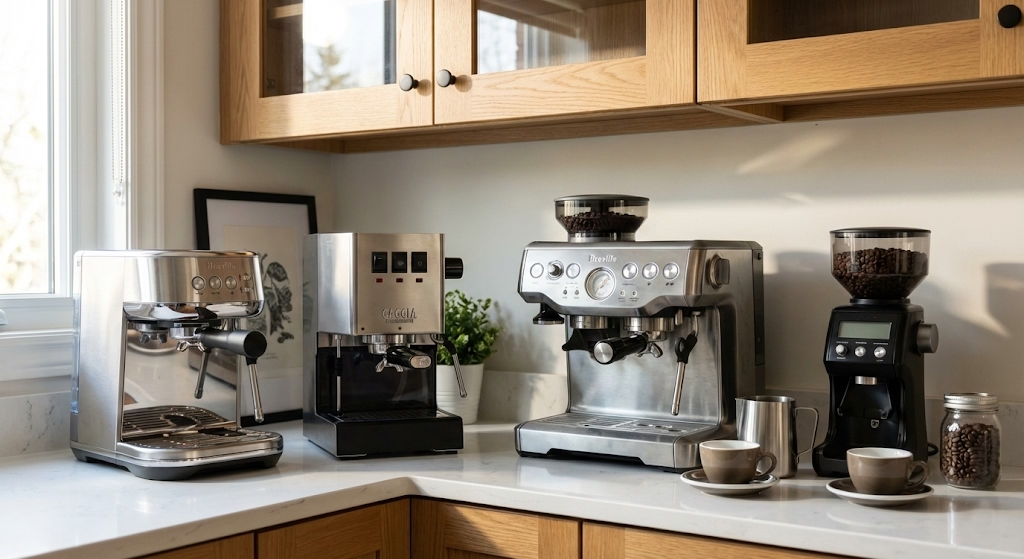
Unboxing a new espresso machine is a mix of excitement and intimidation. You envision café-quality lattes, but often end up with a messy counter and a bitter, watery shot. If you are struggling to figure out how to use an espresso machine, you are not alone. Dialing in the perfect shot is a science that requires precision, variable control, and patience. While the mechanics of pressure and extraction are universal, every machine has its quirks. Whether you have a Breville, a Gaggia, or a DeLonghi, the fundamentals remain the same. However, for this guide, we will focus specifically on the workflow for the popular DeLonghi pump-driven models (like the Dedica or ECP series). These are arguably the most common entry-level **espresso machine for home** setups, yet they are frequently misused.
Here is the data-driven, step-by-step guide to pulling the perfect shot.
How to Use an Espresso Machine for Beginners
Before you grind a single bean, you must understand the tool you are working with. Espresso is not just strong coffee; it is a specific beverage created by forcing hot water (195°F–205°F) through finely-ground coffee at high pressure (9 bars).
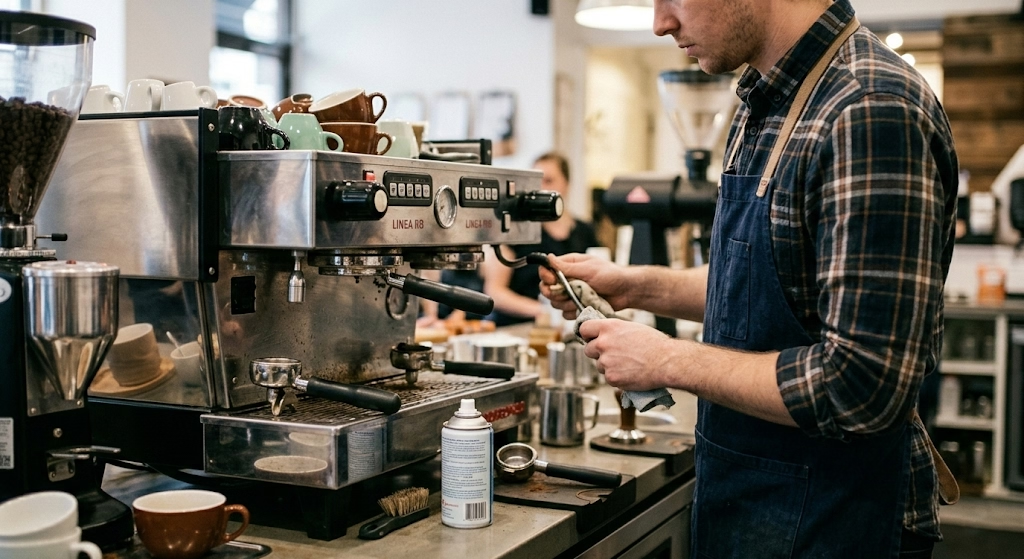
To achieve this, you need to understand the anatomy of your DeLonghi espresso machine:
The Group Head: This is the metal collar on the machine where water exits. It houses the shower screen, which disperses water evenly over your coffee.
The Portafilter: The handle with the metal basket at the end. This holds your coffee grounds and locks into the group head.
The Steam Wand: The metal arm on the side used to heat and texturize milk.
For the purpose of this guide, we are discussing the semi-automatic pump machines, not a DeLonghi automatic espresso machine (bean-to-cup), which handles the grinding and tamping for you.
Step 1: The Warm Up (Do Not Skip This)
Temperature stability is the single most critical variable in espresso extraction. If your water is hot but your machine’s internal pipes and heavy metal portafilter are cold, the temperature of the water will plummet the moment it hits the metal. The result? A sour, under-extracted shot.
The Protocol:
1. Turn on your machine at least 15–20 minutes before brewing.
2. Lock the empty portafilter into the group head. This allows the metal handle to heat up to the same temperature as the boiler.
3. Place your ceramic cup on top of the machine (if it has a warmer) or rinse it with hot water.
4. Run a “blank shot.” Press the brew button without any coffee in the basket. This flushes the system with hot water and ensures the group head is thermally primed.
Step 2: Dosing & Tamping
The quality of your coffee output depends entirely on the uniformity of your coffee puck.
The Grind
A great espresso machine cannot compensate for a poor grinder. Espresso requires a fine grind, similar to the texture of table salt or fine sand.
Too Coarse: Water flows too fast (under-extraction).
Too Fine: Water cannot pass through (choke/over-extraction).
The Basket Selection
Most DeLonghi units come with “Pressurized” baskets (often labeled “Dual Wall”). These have a single tiny hole on the bottom. They are designed to create “fake crema” even if your grind isn’t perfect.
Beginner: Use the pressurized basket if you are using pre-ground coffee.
Pro: If you have a dedicated burr grinder, upgrade to a “Non-Pressurized” (Single Wall) basket for better flavor clarity.
The Tamp
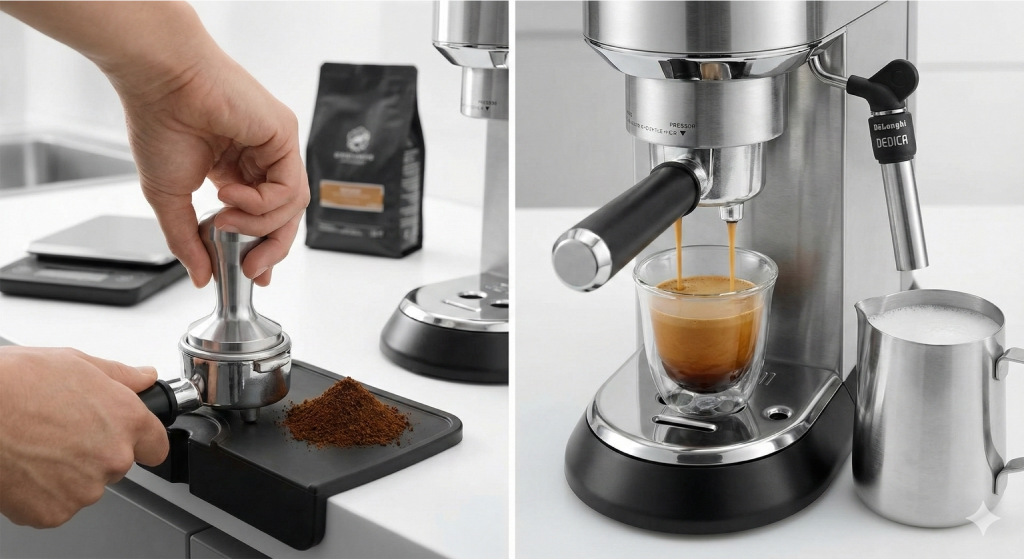
1. Dose: Fill the basket with 14g to 18g of coffee (depending on basket size).
2. Level: Tap the side of the portafilter with your hand to settle the grounds evenly. The bed must be flat.
3. Compress: Use your tamper to press down. The old rule was “30 lbs of pressure,” but modern data suggests consistency is more important than force. Press until the coffee stops compressing.
4. Polish: Give the tamper a light spin to smooth the surface. This prevents “channeling,” where water finds a crack in the puck and bypasses the coffee.
Step 3: The Extraction
This is the moment of truth. Here is the technical breakdown of **how to use DeLonghi espresso machine** controls to pull a shot.
The Workflow:
1. Remove the hot, dry portafilter from the group head.
2. Dose and tamp your coffee immediately to prevent the coffee from burning against the hot metal.
3. Lock the portafilter into the group head tight. (On a **machine a espresso delonghi**, this usually requires turning the handle until it aligns with the “Close” marker).
4. Place your cup under the spouts and start the pump immediately.
5. Watch the flow.
Visual Cues of a Perfect Shot:
0–5 Seconds: You should see a slow drip or a dark, syrupy flow. This is the pre-infusion phase where the puck saturates.
6–20 Seconds: The flow should resemble warm honey or a “mouse tail.” It should be reddish-brown (hazelnut) in color.
21–30 Seconds: The stream creates a golden foam on top called “crema.” Stop the shot when the stream turns “blond” or watery/yellow.
The Ratio Data:
Do not brew by eye; brew by weight. A standard espresso ratio is 1:2.
Input: 18 grams of dry coffee.
Output: 36 grams of liquid espresso.
Time: 25 to 30 seconds.
If your DeLonghi espresso coffee machine is pumping out 36g of liquid in 10 seconds, your grind is too coarse. If it takes 45 seconds, your grind is too fine.
DeLonghi PRO TIP: The Temperature Surf
> One specific quirk of single-boiler machines (like most DeLonghi units) is that they use the same boiler for brewing coffee and steaming milk.
> The Problem: Steam requires higher heat (260°F+) than espresso (200°F). If you steam milk first, the boiler is too hot to brew espresso immediately, and you will burn the coffee.
> The Fix: Always brew your espresso **first**. If you must steam first, you need to cool the boiler down. Turn off the steam switch, open the steam valve, and run the water pump until a steady stream of water (not steam) comes out of the wand. This flushes the super-heated water and resets the temperature for brewing.
Step 4: Milk Texturing
If you are making a latte or cappuccino, milk texture is just as vital as the espresso.
1. Purge: Turn on the steam function. Once ready, open the valve for a second to blow out any condensation water.
2. Position: Submerge the tip of the steam wand just below the surface of the milk.
3. Stretch (0–100°F): Turn the steam on full power. Lower the pitcher slightly so you hear a “paper tearing” sound. This introduces air (micro-foam).
4. Roll (100–140°F): Once the pitcher feels warm to your hand, raise the pitcher so the wand is deeper. Create a vortex to mix the foam into the liquid.
5. Temperature: Turn off the steam when the pitcher is too hot to touch comfortably (approx. 140°F).
Note for DeLonghi Users: Many models come with a “Panarello” wand (a fat metal sleeve over the rubber nozzle). This injects big bubbles automatically. For better, silky micro-foam, you can often remove the metal sleeve and just use the rubber nozzle underneath, holding it at the surface of the milk.
Troubleshooting Your Shot
Even with the best espresso machine, you will encounter bad shots. Use your taste buds to diagnose the problem.
| Taste | Diagnosis | Cause | Solution |
| Sour / Salty | Under-Extracted | Water moved too fast or was too cold. | Grind finer or increase brewing temperature. |
| Bitter / Ashy | Over-Extracted | Water moved too slow or was too hot. | Grind coarser or stop the shot sooner. |
| Watery | Channeling | Uneven tamping or old beans. | Improve tamping technique or buy fresh beans. |
Maintenance and Longevity
To keep your delonghi espresso machine functioning, maintenance is non-negotiable.
Daily: Wipe the steam wand immediately after use. Run a shot of water through the group head after you make your coffee to rinse out oils.
Weekly: Remove the portafilter basket and wash it thoroughly. Oils accumulate and turn rancid, ruining the flavor of fresh coffee.
Monthly: Descale your machine. Scale buildup is the number one killer of espresso machines. Follow the manufacturer’s instructions for descaling solution.
Conclusion
Learning how to use an espresso machine is a journey of trial and error. Your first ten shots might be undrinkable, and that is part of the process. By controlling your variables—grind size, dose weight, and temperature—you can pull shots on a budget setup that rival your local café.
The key to the DeLonghi workflow is patience: let it heat up, prep your puck carefully, and monitor your extraction time.
If you find that you have outgrown your current setup and are looking for more thermal stability or 58mm commercial-style portafilters, you may be ready to upgrade. Check out our comprehensive guide on the best espresso machine to see which model suits your evolving barista skills.