The addition of honey to coffee is a practice often debated between traditionalists and wellness advocates. Beyond personal preference, the interaction between honey (a complex supersaturated sugar solution) and coffee (a complex aqueous extraction of roasted seeds) involves specific chemical reactions, enzyme degradation, and flavor synergy.
This article provides a technical evaluation for coffee professionals and home brewers who require precise data on temperature thresholds, sweetness ratios, and roast-pairing logic.
Quick Answer: The Technical Summary
Flavor Impact: Honey adds floral, earthy, or fruity notes that sugar lacks, but its organic acids can increase the perceived acidity of the brew.
Sweetness Potency: Honey is sweeter than table sugar (sucrose) due to high fructose content; a 1:1 replacement often results in over-sweetening.
Temperature Sensitivity: Adding honey to coffee above 60°C (140°F) begins to denature sensitive enzymes like diastase and glucose oxidase.
Roast Pairing: Light roasts require mild, floral honeys; dark roasts require robust, malty honeys to maintain sensory balance.
Safety: While heat produces HMF (Hydroxymethylfurfural), the levels generated in a standard cup of coffee are statistically insignificant for human health.
Section 1: The Temperature Rule (Enzyme Stability)
Honey is prized for its enzymatic content, specifically **diastase, invertase, and glucose oxidase**. These proteins are thermolabile, meaning their structure and biological activity degrade when exposed to heat.
The degradation is a function of Temperature × Time. While a flash exposure to high heat is less damaging than prolonged simmering, coffee is typically brewed at 90°C–96°C (194°F–205°F).
Safe Temperature Protocol
To preserve the maximum enzymatic integrity of raw honey, follow the **140°F Rule**:
1. Brew your coffee.
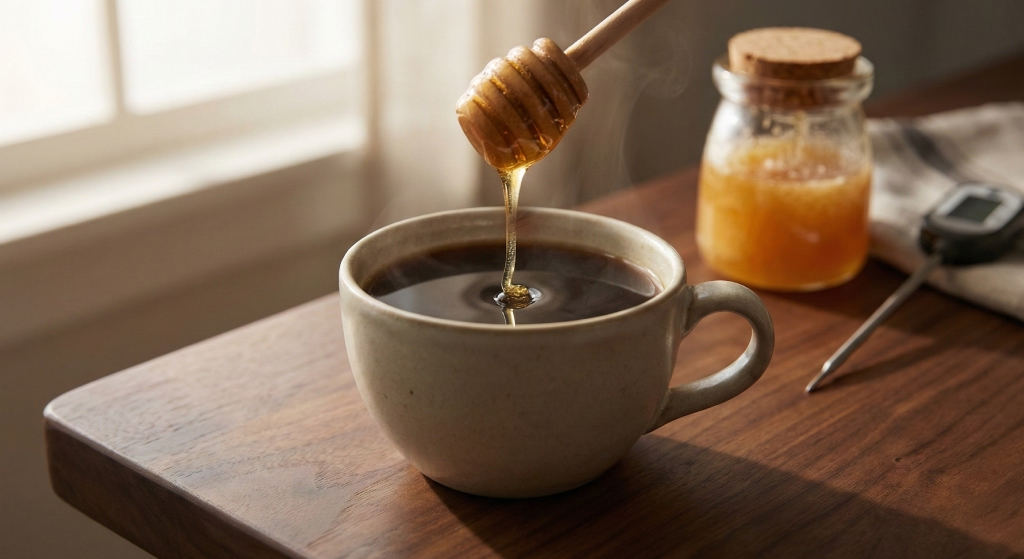
2. Allow the liquid to cool to 60°C (140°F) this is roughly the temperature where a cup is hot but comfortable to sip.
3. Incorporate honey at this stage.
| Liquid Temp (°C) | Enzyme Activity Impact | Sensory Change |
|---|---|---|
| < 40°C | Optimal preservation | Full aromatic profile intact |
| 40°C – 60°C | Gradual denaturation | Minor loss of volatile aromatics |
| 60°C – 80°C | Significant enzyme loss | “Cooked” honey notes emerge |
| > 80°C | Rapid denaturation | Loss of floral nuances; HMF increase |
Section 2: Sweetness Chemistry and Perception
The primary sugars in honey are fructose (approx. 38%) and glucose (approx. 31%), whereas table sugar is 100% sucrose.
1. Relative Sweetness: Fructose is 1.2 to 1.7 times sweeter than sucrose. Consequently, using an equal volume of honey compared to sugar will result in a significantly sweeter beverage.
2. Acidity Interaction: Honey has a pH between 3.4 and 6.1. Coffee typically sits around 4.8 to 5.1. Adding honey increases the total titratable acidity, which may make light-roast coffees taste “sharper” or more sour if not balanced correctly.
Recommended Dosing Protocol
For a standard 250ml (8oz) cup of coffee:
Sugar baseline: 8g to 10g (approx. 2 tsp).
Honey adjustment: 5g to 7g (approx. 1 tsp).
Ratio: Aim for a 0.7:1 honey-to-sugar replacement ratio by weight.
Section 3: Roast Pairing Matrix
The volatile organic compounds (VOCs) in honey vary based on the botanical source. To prevent the honey from clashing with the coffee’s terpene and ester profile, use the following pairing logic:
| Coffee Roast Profile | Suggested Honey Type | Sensory Logic |
|---|---|---|
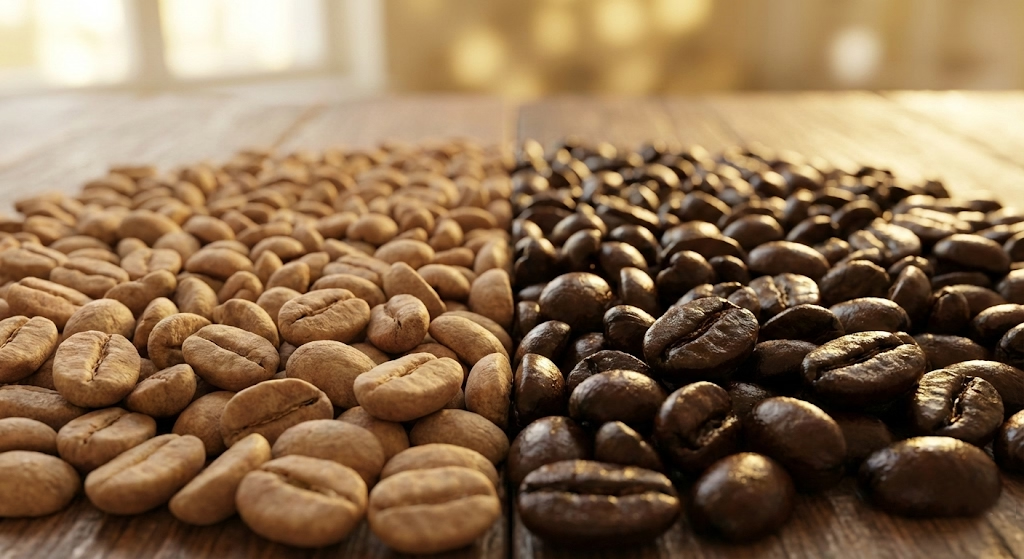
| Light Roast (Floral, Citrus, Tea-like) | Acacia or Clover | High clarity and mild sweetness that doesn’t mask delicate acidity. |
| Medium Roast (Chocolate, Nutty, Caramel) | Orange Blossom or Wildflower | Citric notes complement chocolate; wildflower adds complexity to “brown sugar” notes. |
| Dark Roast (Smoky, Earthy, Bitter) | Buckwheat or Manuka | Bold, malty, and mineral-heavy profiles can stand up to heavy roast bitterness. |
Section 4: HMF and Heat Context
A common concern in food science circles is the formation of 5-Hydroxymethylfurfural (HMF) when honey is heated. HMF is a byproduct of the dehydration of sugars in an acidic environment.
Scientific Context:
HMF is present in many heat-processed foods (bread, cereal, dried fruit).
The European Food Safety Authority (EFSA) and Codex Alimentarius set limits for HMF in honey at 40–80 mg/kg.
Adding a teaspoon of honey to hot coffee creates HMF levels far below any toxicological threshold.
Verdict: While heat reduces the “raw” benefits of honey, it does not make the honey toxic in a culinary context.
Section 5: Honey vs. Sugar (Comparative Data)
When evaluating honey as a sweetener, we must distinguish between chemical composition and metabolic impact.
| Metric | Honey (Raw/Typical) | White Sugar (Sucrose) |
|---|---|---|
| Glycemic Index (GI) | ~58 (varies by nectar source, typically 45–65) | ~65 |
| Composition | Fructose, Glucose, Water, Trace Minerals | 100% Sucrose |
| Caloric Density | ~21 kcal per teaspoon | ~16 kcal per teaspoon |
| Antioxidant Content | Contains trace phenolic acids and flavonoids | None |
Note: While honey contains trace minerals (potassium, magnesium), the concentrations are too low to contribute significantly to daily nutritional requirements in a single serving.
Frequently Asked Questions
Heat does not “destroy” the honey, but it denatures enzymes and dissipates volatile aromatic compounds. To preserve bioactive properties, add honey when the coffee is below 60°C (140°F).
Honey is more calorically dense than sugar, but because it is sweeter, you may use less. Evidence suggests any weight loss benefit is negligible and dependent on total caloric intake.
Yes. Honey is acidic. If added to a high-acid coffee (like a Kenyan or Ethiopian light roast), the combined pH can result in a perceived sourness.
There is no validated scientific evidence suggesting that honey alters the pharmacokinetics of caffeine absorption.
It is safe for consumption, but it is suboptimal for flavor. Boiled honey loses its nuanced floral notes and may take on a generic “burnt sugar” taste.
For individuals with severe pollen allergies, raw honey may trigger a reaction (limited clinical evidence). Most processed honeys have pollen filtered out.
Conclusion
Honey is a scientifically viable sweetener for coffee that offers a more complex sensory profile than sucrose. To maximize the experience:
1. Cool your coffee to 140°F before adding honey.
2. Match the honey intensity to your coffee’s roast level.
3. Reduce your standard sugar portion by 30% to account for honey’s high fructose content.
By following these chemical protocols, you ensure that both the coffee’s terroir and the honey’s botanical origins are respected.