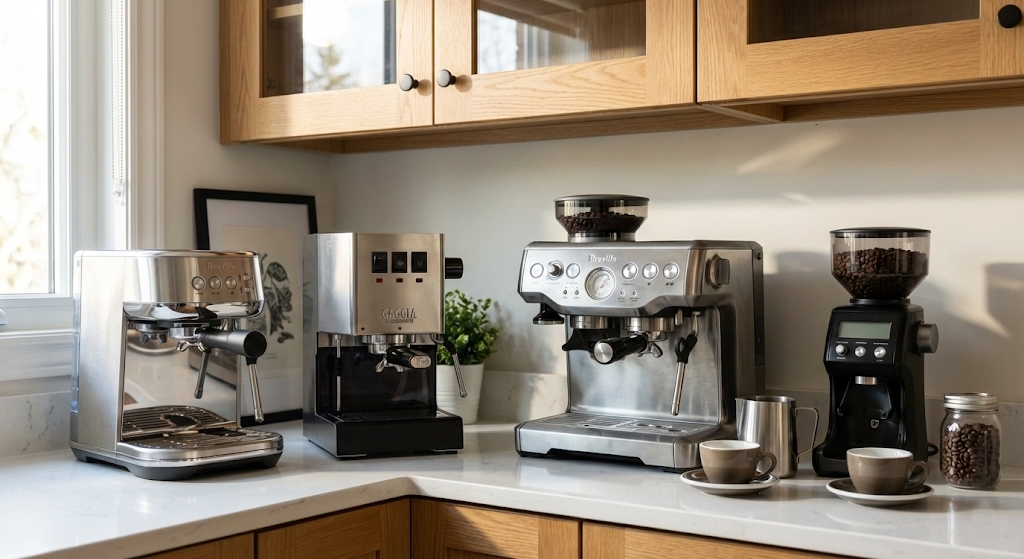
Finding the best espresso machine for home under 700 dollars requires navigating a saturated market filled with misleading marketing and cheap plastic components. At this price point, you are moving past appliance-grade coffee makers and entering the true entry level espresso setup territory.
Expectations must be realistic. A $700 budget secures capable, pump-driven espresso machines that can produce café-quality drinks. However, it requires prioritizing core mechanics over flashy screens. You will not find dual-boiler systems here. Instead, your focus should remain entirely on temperature stability, reliable water pressure, and build quality.
We evaluated the current market to separate reliable equipment from over-promised gadgets. The heating system whether a thermoblock or a single boiler and the grinder you pair with it matter significantly more than automated touchscreens.
This guide breaks down exactly what to look for, highlighting the honest trade-offs of the most capable machines available this year.
Quick Picks: Best Home Espresso Machine Under $700
If you are building your first home coffee bar and want immediate direction, here is how the top contenders categorize:
Best Overall: Breville Bambino Plus (Unmatched milk texturing and ultra-fast heat-up time).
Best All-in-One: Breville Barista Express (The proven standard for all-in-one convenience).
Best for Enthusiasts: Gaggia Classic Pro E24 (Commercial 58mm standard with massive modification potential).
Best Compact Option: Solis Barista Perfetta Plus (A space-saving footprint with surprisingly robust internals).
Best Versatility: Ninja Luxe Café Premier (Bridges the gap between traditional drip coffee and true espresso).
## Head-to-Head Comparison
| Machine | Heating System | Portafilter Size | Built-in Grinder | Best For |
|---|---|---|---|---|
| Breville Bambino Plus | ThermoJet | 54mm | No | Latte drinkers & small spaces |
| Breville Barista Express | Thermocoil | 54mm | Yes | Beginners wanting an all-in-one |
| Breville Infuser | Thermocoil | 54mm | No | Hands-on beginners |
| Breville Duo-Temp Pro | Thermocoil | 54mm | No | Pure budget buyers |
| Gaggia Classic Pro E24 | Single Boiler | 58mm | No | Aspiring hobbyists & modders |
| Solis Perfetta Plus | Thermoblock | 54mm | No | Compact countertop setups |
| De’Longhi Arte Evo | Thermoblock | 51mm | Yes | Cold brew & espresso drinkers |
| Ninja Luxe Café Premier | Thermoblock | 53mm | Yes | Multi-beverage households |
Essential Knowledge: Thermoblock vs Single Boiler
Before reviewing the best budget espresso machine options, you must understand how these machines heat water. At the sub-$700 price point, you are choosing between a thermoblock (or thermocoil) and a single boiler.
The Thermoblock/Thermocoil System
A thermoblock is a metal block with a heated coil running through it. Water is flash-heated as it travels through this pathway. Modern iterations, like Breville’s ThermoJet, offer incredibly fast warm-up differences, often reaching brewing temperatures in three to three seconds.
Because they flash-heat water on demand, thermoblocks transition from brewing espresso to producing steam very quickly. However, they can sometimes lack the raw, sustained steam pressure found in a dedicated boiler, meaning milk frothing takes slightly longer.
The Single Boiler System
A single boiler uses a small reservoir of water heated by an element. Machines like the Gaggia Classic Pro use this traditional method. It provides excellent temperature stability for espresso and powerful, dry steam for milk texturing.
The primary trade-off is the workflow. Because the same boiler handles both brewing (around 200°F) and steaming (around 260°F), you must wait for the machine to heat up to steam milk, then cool down to pull another shot. This steam recovery time directly impacts your workflow if making back-to-back milk drinks.
Translating these specs to reality: choose a thermoblock for speed and convenience on busy mornings. Choose a single boiler if you prioritize traditional espresso mechanics and raw steam power.
The 8 Best Espresso Machines for Home Under 700
1. Breville Bambino Plus
Why It Stands Out
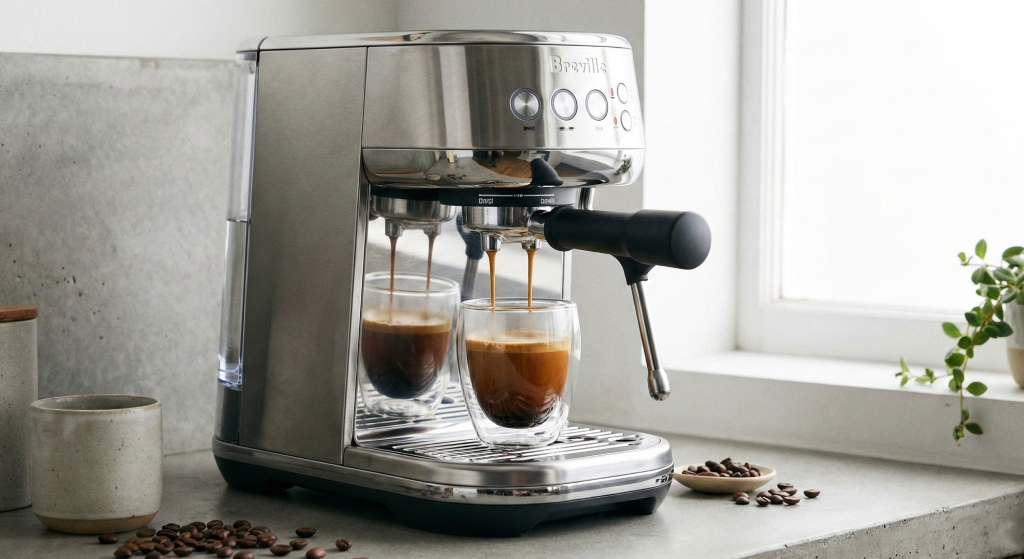
The Breville Bambino Plus consistently ranks as a top affordable espresso machine for home because of its proprietary ThermoJet heating system and automatic milk frothing technology. It punches well above its weight class in milk texture quality, offering hands-free microfoam that rivals professional setups.
Technical Snapshot
Heating System: ThermoJet (3-second heat up)
Portafilter: 54mm vs 58mm portafilter (Uses Breville’s 54mm standard)
Temperature Control: Digital PID temperature control
Pump: 15 bar Italian pump (regulated to 9 bar at the group head)
Real-World Performance
In practice, the Bambino Plus delivers exceptional espresso shot consistency. The machine utilizes a low-pressure pre-infusion, meaning it gently soaks the coffee puck before ramping up to full pressure. This drastically reduces channeling and makes dialing in espresso much more forgiving for novices.
Its milk frothing performance is its defining feature. You select your milk temperature and texture level, place the jug on the temperature sensor, and the machine handles the rest. The resulting microfoam is easily capable of latte art. Steam recovery time is effectively zero due to the ThermoJet system.
Who Should Buy It
This is the ideal choice for consumers who drink primarily milk-based beverages (lattes, cappuccinos) and want café-quality texture without learning manual steaming techniques. Its minimal countertop footprint is perfect for apartments.
Who Should Skip It
Traditionalists who want a heavy, commercial-feeling machine. The Bambino Plus is lightweight, meaning you often have to hold the machine down with one hand while locking in the portafilter.
Long-Term Ownership Notes
Durability is generally good, but it relies heavily on internal electronics. Descaling is mandatory to prevent the narrow ThermoJet lines from clogging. Since it lacks a grinder, you must budget $200–$300 for a capable standalone espresso grinder.
2. Breville Barista Express
Why It Stands Out
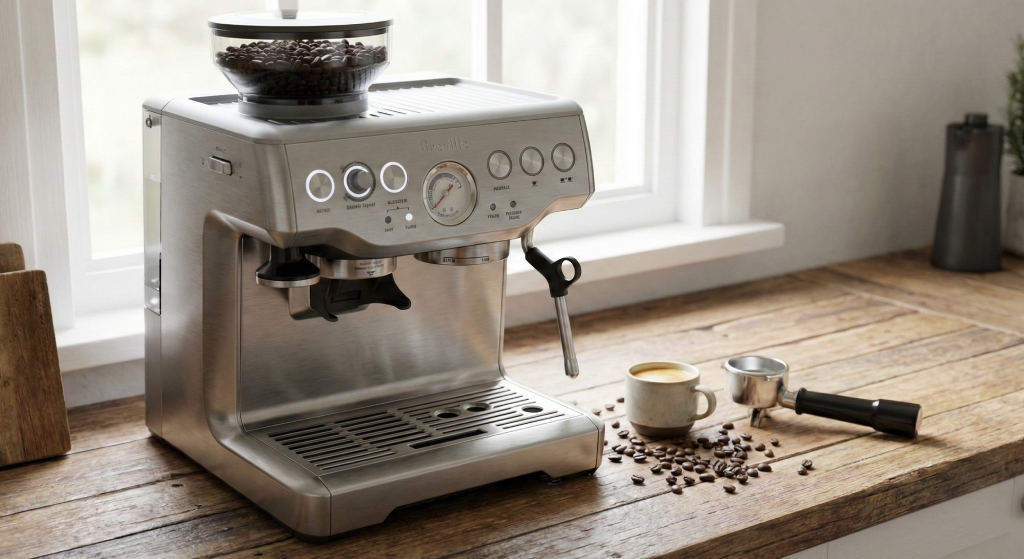
The Barista Express is arguably the most recognizable best semi automatic espresso machine under $700. It established the benchmark for the all-in-one home espresso market. By combining a conical burr grinder and a capable espresso machine into a single chassis, it offers unparalleled convenience.
Technical Snapshot
Heating System: 1600W Thermocoil
Portafilter: 54mm stainless steel
Grinder: Built-in stainless steel conical burrs
Interface: Analog pressure gauge and volumetric controls
Real-World Performance
The Barista Express provides a highly tactile, satisfying workflow. The built-in grinder dispenses grounds directly into the portafilter. The analog pressure gauge provides immediate visual feedback regarding your tamp and grind size, helping users understand espresso extraction theory visually.
Milk frothing performance is manual and highly capable, though the older thermocoil takes slightly longer to reach steam temperature (around 10-15 seconds of steam recovery time) compared to the newer ThermoJet models. The wand produces excellent microfoam once it reaches full pressure.
Who Should Buy It
This is the best espresso machine under $700 with grinder included. It is perfect for beginners who want a complete, ready-to-use home coffee bar without researching and matching separate equipment.
Who Should Skip It
Advanced users who frequently change coffee beans. The built-in grinder has relatively wide adjustment steps, which can sometimes make precise dialing-in difficult with lighter roast specialty coffees.
Long-Term Ownership Notes
This machine is a workhorse with a proven track record of longevity. The most common point of failure after 4-5 years is the solenoid valve, which is an inexpensive part to replace. You will need to clean the integrated grinder burrs monthly to maintain shot consistency.
3. Breville Infuser
Why It Stands Out
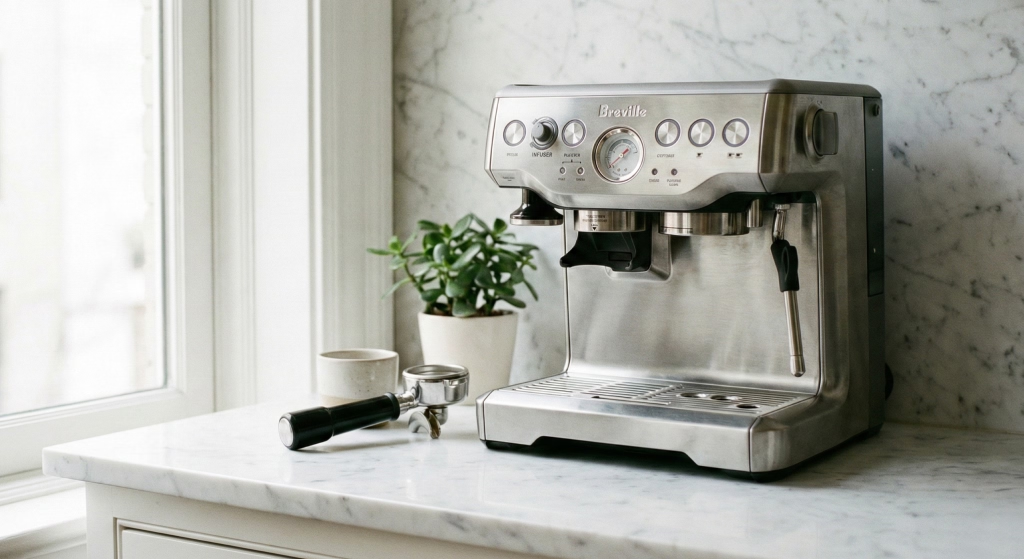
The Breville Infuser is essentially the Barista Express without the integrated grinder. It is designed for those who appreciate the aesthetic and internal capabilities of Breville’s classic lineup but prefer the flexibility of choosing their own dedicated grinder.
Technical Snapshot
Heating System: 1600W Thermocoil
Portafilter: 54mm
Temperature Control: Adjustable PID (in 2°F increments)
Extras: Volumetric control, pre-infusion
Real-World Performance
Because it shares the internal architecture of the Barista Express, the espresso shot consistency is virtually identical. The inclusion of PID temperature control allows you to slightly tweak the water temperature, which is highly beneficial when switching between dark and medium roasts.
The pump pressure (15 bar) is correctly regulated down with an over-pressure valve (OPV) to ensure smooth extractions. The manual steam wand requires proper technique but delivers consistently silky milk once mastered.
Who Should Buy It
Buyers who want the classic Breville aesthetic and pressure gauge, but understand that pairing the machine with a superior standalone grinder will yield better espresso than buying an all-in-one unit.
Who Should Skip It
Those looking for the fastest heat-up times. The older thermocoil takes a bit longer to stabilize than the newer Bambino series.
Long-Term Ownership Notes
Expect a lifespan similar to the Barista Express. Maintaining the steam wand by purging it immediately after use is critical, as milk buildup can quickly block the single-hole tip. Replacement group head gaskets are cheap and easy to source.
4. Breville Duo-Temp Pro
Why It Stands Out
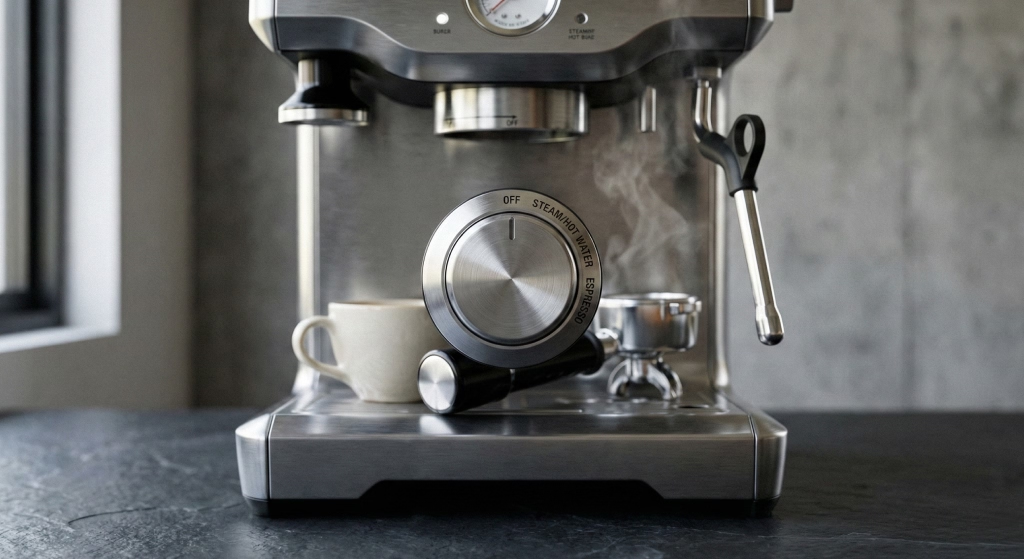
The Duo-Temp Pro strips away programmable shot volumes and pressure gauges to offer a completely manual, bare-bones experience. It provides the core thermo-stability of the Breville ecosystem at the lowest possible entry price.
Technical Snapshot
Heating System: 1600W Thermocoil
Portafilter: 54mm
Interface: Single central dial (Espresso / Steam)
Features: Auto-purge for temperature stability
Real-World Performance
You control the shot volume entirely by turning the dial on and off. While it lacks programmable PID temperature control, it does feature an automatic purge function. After you steam milk, the machine automatically flushes cold water through the thermocoil to bring the temperature back down to espresso brewing range.
This auto-purge severely cuts down the steam recovery time workflow bottleneck found in budget machines. The milk frothing performance is identical to the Infuser—slower than commercial machines, but highly capable of creating latte art foam.
Who Should Buy It
Budget-conscious buyers who want reliable internal components without paying for digital features. It is a highly capable espresso machine under 700 dollars if you are willing to weigh your shots manually with a coffee scale.
Who Should Skip It
Users who want walk-away convenience. Because there are no volumetric buttons, you cannot simply press “double shot” and turn your back; you must manually stop the flow of water.
Long-Term Ownership Notes
Fewer electronic components mean fewer potential points of failure. The Duo-Temp Pro is highly durable. Ensure you perform regular backflushing routines to keep the group head clean of coffee oils.
5. Gaggia Classic Pro E24
Why It Stands Out
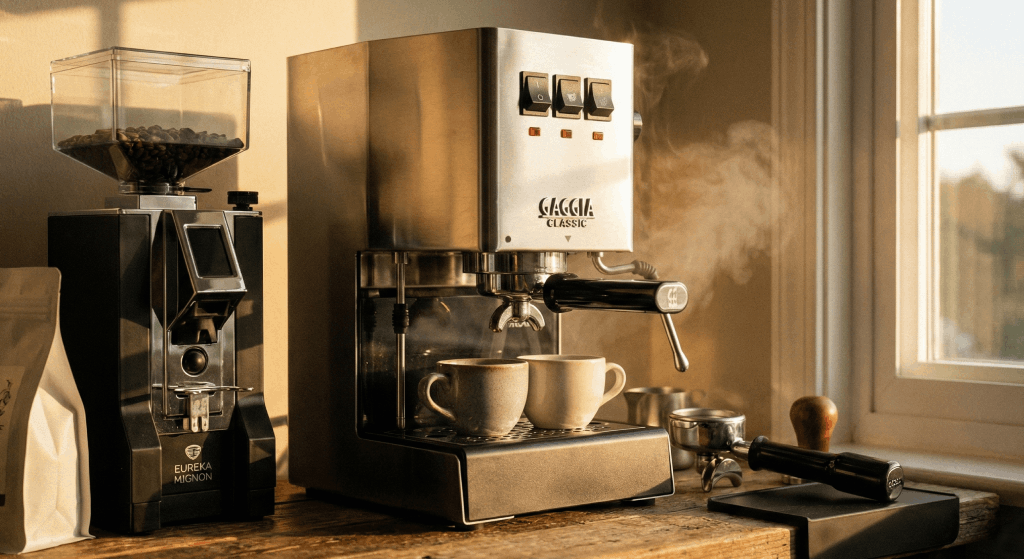
The Gaggia Classic is a legendary fixture in the home espresso world. The latest E24 iteration maintains its reputation as a rugged, commercial-style machine. It is the definitive best espresso machine for beginners who have ambitions of eventually becoming advanced home baristas.
Technical Snapshot
Heating System: Single Boiler
Portafilter: 58mm commercial standard
Pump: 15 bar pump pressure (Requires 9-bar OPV mod for best results)
Build: Heavy stainless steel housing
Real-World Performance
The Gaggia utilizes a heavy 58mm vs 54mm portafilter dynamic, meaning the coffee puck is wider and shallower. This replicates commercial cafe geometry, making it highly sensitive to your puck prep. Because it is a single boiler without a PID out of the box, users must learn “temperature surfing”—flushing water to cycle the boiler element for consistent brewing temps.
Once dialed in, the espresso shot consistency is spectacular. Furthermore, the steam wand is exceptionally powerful. However, the single boiler workflow means you must wait about 45 seconds after pulling a shot for the machine to build up steam pressure.
Who Should Buy It
Tinkerers, purists, and traditionalists. This machine has a massive aftermarket community. Upgrading the OPV spring to 9 bar and eventually adding an aftermarket PID turns this $500 machine into a giant-killer.
Who Should Skip It
Anyone looking for modern convenience, fast heat-up times, or automated features. The Gaggia demands patience, proper technique, and an excellent standalone grinder.
Long-Term Ownership Notes
Built like a tank. It is highly serviceable at home with basic tools. Gaskets, pumps, and boiler parts are standardized and cheap. With proper descaling and maintenance, a Gaggia Classic can easily last 15 to 20 years.
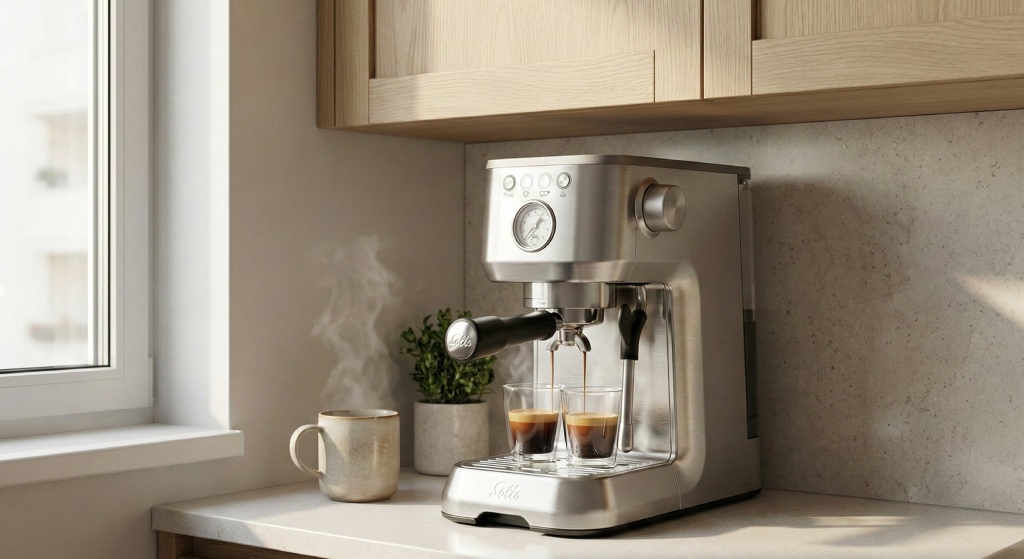
6. Solis Barista Perfetta Plus
Why It Stands Out
Often overshadowed by more prominent brands, the Swiss-engineered Solis Barista Perfetta Plus is an under-the-radar gem. It offers a premium feature set in a very narrow chassis, making it a premier affordable espresso machine for home setups with limited space.
Technical Snapshot
Heating System: Thermoblock (40-second heat up)
Portafilter: 54mm
Features: Manometer (pressure gauge), built-in shot timer
Extras: Programmable pre-infusion
Real-World Performance
The Perfetta Plus excels in usability. The inclusion of a built-in shot timer integrated directly into the interface is a massive quality-of-life feature, eliminating the need for a separate timer on your scale. The analog pressure gauge actively displays extraction health.
It features programmable PID temperature control (three settings) and allows you to adjust the pre-infusion time. The thermoblock provides strong, dry steam. Its milk frothing performance is surprisingly robust, easily rolling milk into a glossy microfoam.
Who Should Buy It
Those who want the tactile feedback of a pressure gauge and the convenience of a shot timer, but have severe constraints regarding their countertop footprint.
Who Should Skip It
Heavy milk drinkers who are making four or five lattes back-to-back. The machine is lightweight and its drip tray capacity is quite small, requiring frequent emptying during heavy usage.
Long-Term Ownership Notes
Build quality blends heavy plastics with stainless cladding. It is reliable, but lacks the massive aftermarket parts ecosystem of the Gaggia or Breville. Solis includes a standard water filter system, which extends the machine’s life by preventing scale buildup.
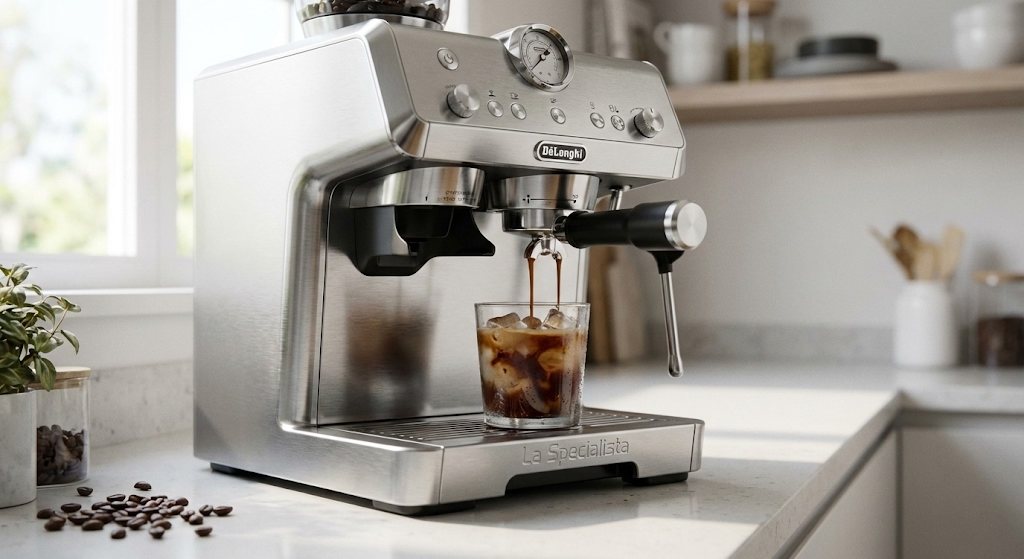
7. De’Longhi La Specialista Arte Evo
Why It Stands Out
De’Longhi brings something entirely different to the built-in grinder category with the Arte Evo. Beyond traditional hot espresso, it features a proprietary Cold Extraction Technology, allowing users to pull cold brew espresso shots in under three minutes.
Technical Snapshot
Heating System: Thermoblock
Portafilter: 51mm
Grinder: Built-in conical burr with 8 settings
Features: Cold Extraction Technology, included tamping guide
Real-World Performance
The workflow is highly guided. De’Longhi includes a dosing funnel and a tamping mat that locks into place, ensuring less mess on the counter. The espresso extraction is solid, though the smaller 51mm portafilter requires a deeper coffee puck, which can sometimes be finicky to dial in perfectly.
The cold extraction feature uses room-temperature water at low pressure to gently extract coffee. The resulting cold espresso is sweet, smooth, and perfect for iced lattes. The manual commercial-style steam wand works effectively for hot milk drinks, with standard thermoblock steam recovery time.
Who Should Buy It
Iced coffee enthusiasts. If your household splits its time between traditional hot lattes and iced beverages, the cold extraction feature provides massive daily value.
Who Should Skip It
Espresso purists who want to explore light roast specialty coffees. The built-in grinder only has 8 stepped settings, limiting the micro-adjustments necessary for dialing in finicky beans.
Long-Term Ownership Notes
De’Longhi machines are mass-produced and generally very reliable. However, the smaller 51mm portafilter size means standard aftermarket accessories (tampers, precision baskets) are slightly harder to find than 54mm or 58mm alternatives.
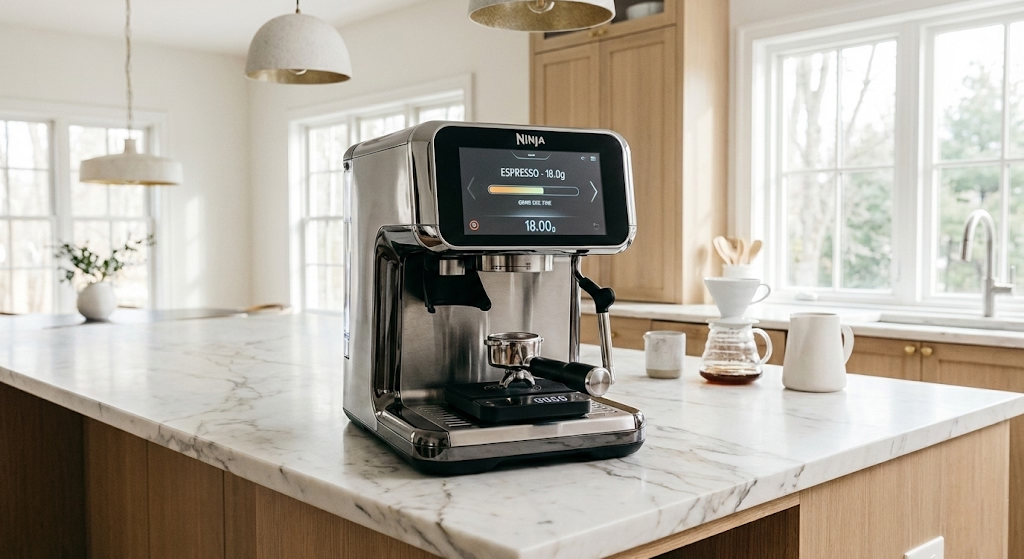
8. Ninja Luxe Café Premier
Why It Stands Out
The Ninja Luxe Café Premier attempts to be the ultimate multi-beverage station. It is a highly ambitious machine that bridges the gap between a standard drip coffee maker and a semi-automatic espresso machine, utilizing smart dosing technology.
Technical Snapshot
Heating System: Thermoblock
Portafilter: 53mm
Grinder: Built-in with grind-by-weight scale integration
Features: Brews espresso, drip coffee, and cold brew
Real-World Performance
Ninja removes the guesswork from dialing in. The integrated scale weighs the beans, recommends a grind size via the display screen, and doses automatically. For casual users, this takes the intimidation out of the entry level espresso setup.
When pulling espresso, the pump pressure (15 bar) is adequately managed, yielding decent crema and balance. However, the espresso shot consistency cannot match a dedicated single-purpose machine like the Bambino Plus. The automatic milk frother works well for standard foam, though it lacks the sheer density of true café microfoam.
Who Should Buy It
Households with vastly different coffee preferences. If one person wants a 12oz drip coffee, another wants a cold brew, and another wants a latte, this machine handles all three competently.
Who Should Skip It
Dedicated espresso hobbyists. The jack-of-all-trades approach means it sacrifices the micro-precision required for pulling god-tier espresso shots from light roast single-origin beans.
Long-Term Ownership Notes
This machine relies on a complex array of sensors and scales. While incredibly convenient, more electronics mean a higher likelihood of long-term failure compared to a purely mechanical machine. Strictly follow the manufacturer’s cleaning cycles.
The Grinder Bottleneck: Why Your Machine is Only Half the Equation
It is a hard truth in the coffee industry: a $200 espresso machine paired with a $500 grinder will consistently outperform a $700 espresso machine paired with a $50 grinder. The grinder is the true heart of your home coffee bar.
To achieve proper espresso shot consistency, water must pass through the coffee puck evenly. If a cheap blade grinder or a low-quality burr grinder produces uneven particles (boulders and dust), water will channel through the weakest points. This results in sour, bitter, and hollow-tasting coffee, regardless of whether your machine has PID temperature control.
Built-In vs Separate Grinders
Machines like the Barista Express offer a built-in grinder vs separate setup dilemma. Integrated grinders offer unmatched footprint convenience and value. However, they are inherently compromised. The motor heat from the espresso boiler can affect the beans in the hopper, and the grind adjustment steps are usually too wide for precision dialing.
If you choose a machine without a grinder (like the Bambino Plus or Gaggia Classic), you must allocate a portion of your $700 budget to a dedicated standalone grinder. Hand grinders like the 1Zpresso J-Ultra or entry-level electrics like the Baratza Encore ESP or Fellow Opus are mandatory pairings in this price bracket.
The Hidden Costs: 5-Year Ownership Expectations
Buying an affordable espresso machine for home is an investment that requires ongoing maintenance. Over a five-year lifespan, your machine will require care to maintain its performance and internal hygiene.
Water Quality and Descaling
Scale buildup from hard water is the number one killer of espresso equipment. Depending on your local water hardness, you will need to descale your thermoblock or boiler every 2 to 4 months. Using filtered water dramatically reduces scale buildup and improves the flavor of your espresso.
Gasket Replacement
The silicone or rubber ring inside your group head (the gasket) creates a seal against the portafilter. Over time, heat and pressure cause this gasket to dry out and harden, leading to water leaking over the sides of the portafilter. Expect to replace this $10 part every 12 to 18 months.
Burr Wear
If you purchase a machine with a built-in grinder, the stainless steel burrs will slowly dull over time. For an average household making two to four drinks a day, you will likely need to replace the grinder burrs around year four to maintain grind precision.
Warranty and Serviceability
Most machines under $700 carry a 1-year or 2-year limited warranty. Breville machines are notoriously difficult to repair yourself due to densely packed electronics, often requiring factory service. Conversely, machines like the Gaggia Classic Pro are highly modular, allowing owners to source and replace individual switches and pumps with basic screwdrivers.
Buying Guide: How to Choose an Affordable Espresso Machine for Home
Choosing the best home espresso machine under $700 requires matching the hardware to your daily routine. Here is exactly how to evaluate your needs.
1. Heating System Choice
Ask yourself about your morning patience. If you want a coffee ready in 60 seconds from the moment you wake up, you strictly need a thermoblock machine. If you value raw mechanical stability and don’t mind waiting 15 minutes for a boiler to thoroughly heat the metal group head, a single boiler is superior.
2. 54mm vs 58mm Decision
The 54mm vs 58mm portafilter debate centers around standardizations. The 58mm size is the commercial standard. Baskets, tampers, and distribution tools are universally available. The 54mm size (popularized by Breville) creates a deeper puck, which is naturally more forgiving of slight tamping errors, making it highly suitable for beginners.
3. Built-In Grinder vs Separate
If you hate clutter and prioritize an easy, all-in-one aesthetic, buy a machine with an integrated grinder. If you want the absolute best tasting espresso and the ability to upgrade your setup piecemeal over the years, buy a standalone machine and a separate dedicated grinder.
4. Milk Workflow Needs
Evaluate your milk frothing performance needs. If you drink straight espresso or Americanos, steam power is irrelevant. If you drink 16oz lattes, you need strong steam pressure. If you want café-quality microfoam but lack the patience to learn whirlpool techniques, an auto-steaming wand like the Bambino Plus is essential.
5. Counter Space Considerations
Measure your clearance. Look out for overhanging upper cabinets. Machines that require you to top-fill the water reservoir need significant overhead clearance. Machines with a minimal countertop footprint are much easier to manage in galley kitchens.
6. Upgrade Flexibility
Consider where you will be in three years. If you view espresso as a hobby you want to grow into, choose a machine with high upgrade flexibility, like the Gaggia. If you just want good coffee with zero fuss, buy an appliance-focused machine.
Frequently Asked Questions (FAQ)
Yes, $700 is a highly capable budget for an entry level espresso setup. It secures genuine pump-driven pressure (15 bar regulated to 9 bar) and reliable temperature stability. The key is ensuring you factor a high-quality espresso grinder into that budget if the machine does not include one.
Neither is universally better; they serve different workflows. A thermoblock provides rapid heat-up times and fast transitions to steam, making it ideal for busy mornings. A boiler provides superior thermal mass, temperature stability, and raw steam pressure, making it better for traditional espresso pulling.
A built-in grinder is worth it for beginners who value a compact footprint and all-in-one convenience. However, it is a compromise in grind quality. Separate grinders offer wider adjustment ranges, better burr sets, and prevent machine heat from affecting stored coffee beans.
With proper maintenance, regular descaling, and timely gasket replacements, a home espresso machine under $700 should last between 5 to 10 years. Purely mechanical machines usually outlast digitally heavy, automated machines.
The 58mm portafilter is the commercial standard, offering the widest compatibility for aftermarket baskets and tampers. However, a 54mm portafilter (used by Breville) creates a deeper coffee puck. This deeper puck naturally resists channeling, making it much more forgiving and often better for beginners.
Yes, beginners can use a 58mm espresso machine. While the wider, shallower coffee puck requires more precise grinding, distribution, and tamping techniques to avoid channeling, starting with a 58mm portafilter teaches standard commercial barista skills that transfer to high-end prosumer machines later on.
Conclusion: Which Best Budget Espresso Machine is Right for You?
Finding the best espresso machine for home under 700 dollars comes down to honestly assessing your daily routine. No single machine is perfect, but the right machine will perfectly match your workflow.
For the Absolute Beginner: The Breville Barista Express remains the king of the all-in-one category, providing everything you need in a single box to start pulling excellent shots immediately.
For the Latte-Focused User: The Breville Bambino Plus offers an unbeatable combination of rapid heat-up times and flawless, automated microfoam that rivals machines triple its price.
For the Aspiring Enthusiast: The Gaggia Classic Pro E24 offers commercial 58mm architecture, robust single-boiler internals, and a clear pathway for modifications as your skills grow.
For the Small Kitchen: The Solis Barista Perfetta Plus packs premium features, PID temperature control, and an analog pressure gauge into an incredibly sleek and narrow footprint.
For the Multi-Beverage Buyer: The Ninja Luxe Café Premier intelligently bridges the gap between cold brew, drip coffee, and espresso with smart dosing technology.
Investing in your home coffee setup pays dividends in daily satisfaction. Choose the system that fits your morning rhythm, pair it with freshly roasted coffee, and enjoy the process.