
You’re standing in line at a coffee shop, scanning the menu like it’s written in another language. Latte… cappuccino… macchiato… Why do they all sound familiar, yet mysteriously different? If you’ve ever panic-ordered “uhh… a latte?” just to keep the line moving, you’re not alone.
This guide breaks down cappuccino vs latte in the simplest, friendliest way possible no coffee snobbery, no textbook vibes. We’ll cover taste, texture, sweetness, and even cappuccino vs latte calories, so you can order with confidence next time. By the end, you’ll know exactly what you’re getting and which drink matches your mood.
Quick Answer: Cappuccino vs Latte (In Plain English)
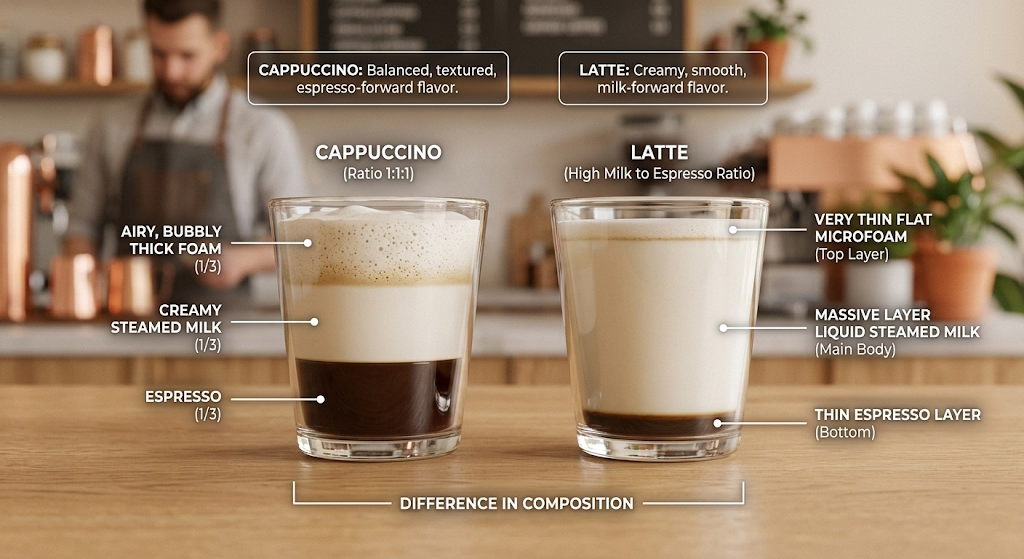
Latte: Mostly steamed milk with a thin layer of macrofoam. It’s creamier, sweeter, and milk-forward.
Cappuccino: Equal parts espresso, steamed milk, and foam. It tastes stronger and “fluffier”** with a more noticeable coffee punch.
Caffeine is usually similar (often the same espresso base), but the texture and milk ratio change everything.
What is a Latte? (The Creamy Comfort Drink)
If coffee drinks had personalities, the latte would be the cozy friend who shows up with a blanket and a rom-com.
The “Milky Way” rule
Here’s the simplest way to understand what is a latte vs cappuccino
A latte is mostly steamed milk.
Espresso on the bottom
Next, a big pour of steamed milk
Finally, a tiny cap of microfoam on top (just enough to look pretty)
This is why lattes come in bigger cups and taste smoother. The milk does most of the talking.
Taste profile: sweet, mellow, and milk-forward
Because there’s more milk, a latte tastes:
Creamy and gentle
Naturally sweeter (milk sweetness gets more noticeable when warmed)
Less intense in coffee flavor
If you like your coffee to feel like a warm hug, latte energy is for you.
What is a Cappuccino? (The Bold & Fluffy Classic)
A cappuccino is the latte’s bolder sibling the one wearing a leather jacket and making strong
opinions about music.
The “Rule of Thirds”
The easiest way to explain the difference between a cappuccino and a latte is this:
A cappuccino is balanced in thirds.
One-third espresso
Another third steamed milk
A final third of airy foam
That foam layer is the signature. It’s thicker, fluffier, and makes the drink feel lighter—even when the
coffee flavor hits harder.
Taste profile: stronger coffee flavor with a fluffy top
Because there’s less milk (and more foam), cappuccinos taste:
● More espresso-forward
● Richer and roastier
● Light and airy in texture (thanks to that foam blanket)
If you want coffee flavor that still feels “fancy,” this is your move.
The Big Differences: A Quick Comparison
So… what is difference between cappuccino and latte in the real world (aka: what you’ll actually notice while drinking it)?
1) Texture: silky vs fluffy
Latte: smooth, silky, creamy—like melted ice cream (in the best way).
Cappuccino: lighter sip with a pillow of foam on top.
2) Flavor strength: latte is softer, cappuccino is bolder
Both start with espresso, but milk changes the volume.
A latte’s extra milk mellows the espresso.
A cappuccino’s lighter milk ratio **lets espresso shine**.
3) Sweetness: the latte usually tastes sweeter
This surprises people, but it’s simple:
More milk = more natural milk sweetness.
So if you’re comparing cappuccino vs latte side-by-side, the latte usually tastes sweeter even with zero added sugar.
4) Caffeine myth-busting: they’re usually the same
People assume cappuccinos have more caffeine because they taste stronger.
Most of the time, that’s not true.
In many cafés, both drinks use the same espresso base (often a double shot), meaning the caffeine is usually similar. The cappuccino just tastes stronger because it has less milk diluting it.
Caffeine & Calories: The Breakdown
Let’s talk real-life ordering: energy + nutrition. If you’re choosing between these two, cappuccino vs latte calories can be a deciding factor especially at a 12 oz size.
Below is a simple comparison using 12 oz drinks made with whole milk (common café default). Values vary by shop and milk brand, but these are solid estimates
| Drink (12 oz) | Espresso Base | Milk Volume | Estimated Calories |
|---|---|---|---|
| Latte (12 oz) | Typically 2 shots | High | ~200 calories |
| Cappuccino (12 oz) | Typically 2 shots | Medium (more foam) | ~110 calories |
Why the difference?
A cappuccino has less liquid milk and more foam, so you’re consuming less milk overall. Foam feels big, but it doesn’t add as many calories as a cup filled with steamed milk.
Wait, What About the Macchiato?
If you’ve ever wondered about cappuccino vs latte vs macchiato, here’s the quick, no-confusion explanation:
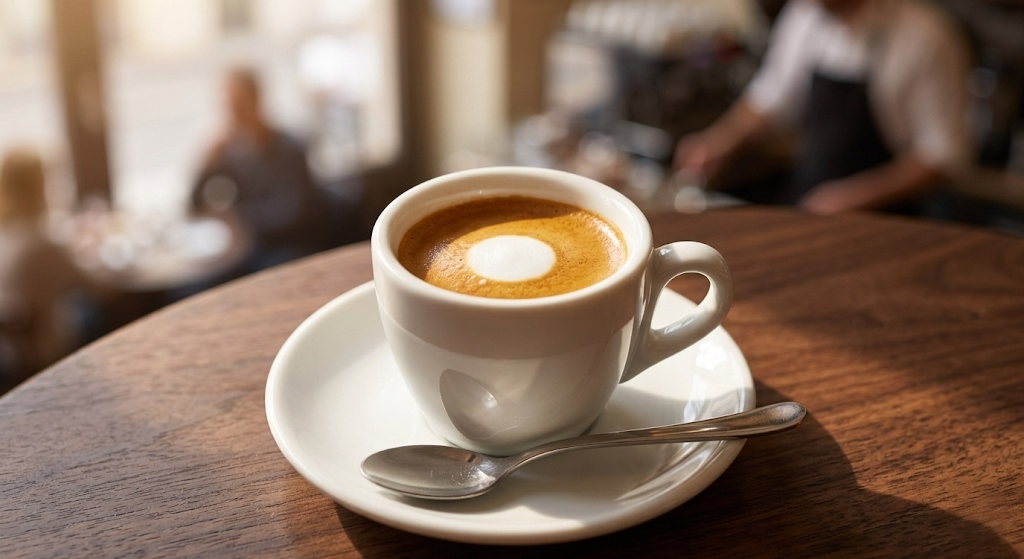
A traditional macchiato is basically:
Espresso
“Marked” with a **small dollop of foam** (or a tiny splash of milk)
That’s it.
It’s the strongest-tasting option of the three because there’s very little milk to soften the espresso. If a latte is “creamy comfort” and a cappuccino is “bold and fluffy,” a traditional macchiato is “espresso, loud and proud.”
(Quick note: many big chains use “macchiato” to mean a larger, milkier drink. If you want the traditional version, you can ask for an “espresso macchiato.”)
So, Which One Should You Order?
Here’s the fun part: ordering with confidence. Use this like a mini decision guide the next time you’re at the counter.
Order a Latte if…
● You want something creamy and mellow
● A less intense coffee flavor sounds appealing
● Drinks that taste naturally sweeter are your favorite
● It needs to be a great base for flavors (vanilla, caramel, hazelnut)
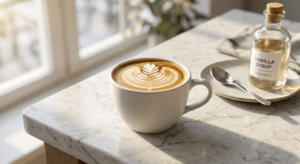
● Seeing latte art and enjoying that smooth, café-style vibe is your goal
Order a Cappuccino if…
● You want a stronger espresso taste
● The idea of a lighter, fluffier texture is exactly what you need
● Fewer calories and less milk are a priority today
● Sipping through a classic foam cap is an experience you enjoy
● Something bold but still perfectly balanced matches your mood
If you’re still unsure, here’s a simple way to decide:
Want creamy? Latte.
Want bold + fluffy? Cappuccino.
Frequently Asked Questions
Sometimes but it’s harder. Latte art works best with silky microfoam, which is typical for lattes.
Cappuccinos usually have thicker, airier foam, which doesn’t “pour” as smoothly, so detailed art is
less common (though skilled baristas can pull it off).
A flat white is similar to a latte but typically has less milk and a thinner, silkier layer of
microfoam, making the espresso taste more prominent. Think of it as a latte’s slightly stronger,
more espresso-forward cousin still creamy, just more coffee-forward.
Related Articles

Share your coffee experience
Have you tried this product? Add a thoughtful review or ask a question.
2 Responses