If your morning brew has started tasting bitter, lukewarm, or lacks that signature golden crema, the problem likely isn’t your beans—it’s your machine.
Owning a premium appliance requires a commitment to maintenance. Minerals in your water and oils from your coffee beans accumulate over time, silently clogging the intricate internals of your device.
In this ultimate care guide, we analyze how to clean your Breville espresso machine, the critical difference between cleaning and descaling, and when to look for replacement parts to keep your espresso flowing smoothly.
Cleaning vs. Descaling: What’s the Difference?
Before diving into the steps, it is vital to understand that cleaning and descaling are two distinct processes that address different variables.
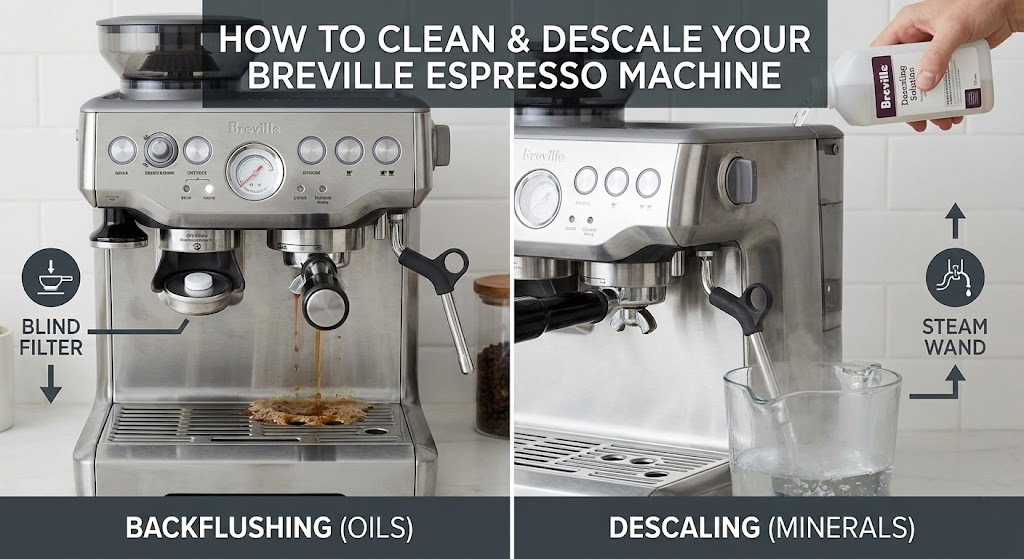
- Cleaning (Backflushing): Removes built-up coffee oils and grounds from the group head. Rancid oils ruin the flavor of fresh coffee.
- Descaling: Removes mineral buildup (limescale) from the boiler and pipes. Scale affects temperature stability, flow rate, and pressure.
To maintain the best flavor and machine longevity, you must perform both regularly.
Part 1: Daily and Weekly Cleaning (The Oils)
If you want to know how to clean Breville espresso machine components for daily use, consistency is key.
The Daily Wipe Down After every session, flush the group head (run water without the portafilter) to rinse away loose grounds. Always wipe the steam wand immediately after texturing milk. If milk dries on the wand, it blocks the steam tip and harbors bacteria.
The Weekly Backflush Most Breville machines, including the Barista Express and Duo Temp Pro, utilize a “Clean Me” light. However, we recommend backflushing weekly regardless of the indicator.
- Insert the Blind Filter: Place the rubber cleaning disc into your portafilter.
- Add a Tablet: Drop a specialized [Link: Breville Cleaning Tablet] into the center.
- Run the Cycle: Lock the portafilter in. If your machine lacks an auto-cycle, manually run the shot button for 10 seconds, stop for 10 seconds, and repeat 5 times.
- Rinse: Remove the portafilter and rinse thoroughly to clear detergent residue.
Pro Tip: Don’t forget to wash your breville espresso machine accessories, such as the milk jug and drip tray, with warm soapy water to prevent odors.
Part 2: How to Descale Your Breville Espresso Machine (The Minerals)
Scale is the silent killer of espresso gear. Even with filtered water, calcium eventually coats the heating element, leading to pump failure.
Step 1: Choose the Right Solution
Warning: While some DIY enthusiasts suggest vinegar, it is too harsh for the rubber gaskets inside high-end machines. It also leaves a lingering smell. We strictly recommend using a dedicated [Link: Breville Descaling Solution] or a safe commercial powder like Dezcal.
Step 2: Prepare the Machine
- Empty the Drip Tray: You will flush a lot of water, so start empty.
- Remove the Filter: Take out the water tank and remove the charcoal breville espresso machine water filter. Descaling acid will damage this filter.
- Mix the Solution: Dissolve your powder/liquid into a full tank of warm water.
Step 3: Enter Descaling Mode
Different models have different entry methods:
- Digital Models (Touch/Pro): Navigate the menu to “Descale.”
- Analog Models (Express/Duo Temp): Usually involves holding the 1-Cup and 2-Cup buttons while powering on. Consult your manual for your specific model.
Step 4: Run the Cycle
- Group Head: Run about half the tank through the group head.
- Steam Wand: Run the remaining solution through the steam wand/hot water outlet.
- The Soak: If manually descaling, let the solution sit inside for 5–10 minutes to break down stubborn scale.
Step 5: The Fresh Water Rinse
Critical: Once the tank is empty, rinse it thoroughly and fill with fresh cold water. Run the entire tank through the machine again to ensure no chemical taste remains.
Prevention & Parts
The best way to reduce descaling frequency is filtration. The resin-charcoal breville espresso machine water filter in your tank should be replaced every 2 to 3 months.
When to Replace the Water Pump?
A common question for long-term owners: how often to replace breville espresso machine water pump units?
Generally, the Ulka vibration pumps used in these machines last 5 to 7 years. You will know the pump is failing when:
- The machine becomes noticeably quieter (a low hum vs. a loud vibration).
- The pressure gauge fails to rise.
- Water flow is a trickle despite a fresh descale.
If you are comfortable with repairs, you can source parts breville espresso machine owners frequently need (like silicone gaskets and water tanks) online. However, for solenoid valve issues or electrical failures, we recommend seeking professional breville espresso machine repair to avoid voiding your warranty.