
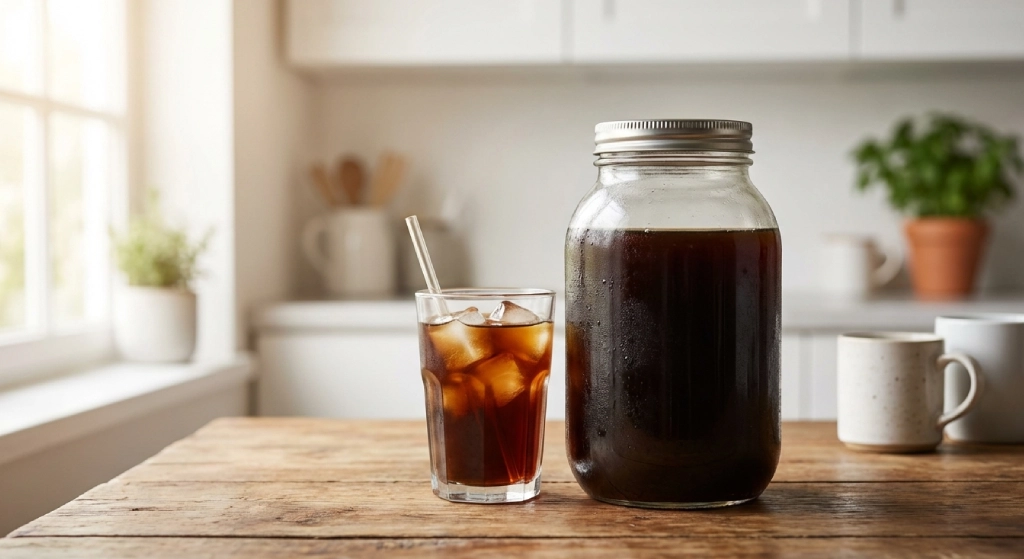
Cold brew has a reputation for being complicated. It isn’t. If you can stir coffee grounds into water and wait, you can make cold brew at home that tastes better than most café versions and costs a fraction of the price.
The trick isn’t fancy gear or a secret technique. It’s getting three things right: the ratio, the grind, and the steep time. Most guides fumble at least one of these, which is why so many people end up with coffee that’s either watery, bitter, or weirdly sour.
This guide walks you through exactly how to make cold brew coffee at home, step by step, with numbers that actually work. No jargon, no guessing.
Quick Answer
Mix 1 part coarse-ground coffee with 5 parts cold water. Stir, cover, and steep for 16 hours at room temperature or in the fridge. Strain through a fine mesh and optional paper filter. Dilute the concentrate 1:2 with water, milk, or ice before drinking.
That’s the whole method. The rest of this article explains the why so you can adjust it to your taste.
What Is Cold Brew Coffee?
Cold brew is coffee made by steeping coarse grounds in cold or room-temperature water for a long time — usually 12 to 18 hours. No heat, no pressure, just time.
Because heat isn’t involved, the flavor profile is different. Cold brew tastes smoother, sweeter, and less bitter than hot coffee. Many of the sharp, acidic compounds that come out under heat simply don’t dissolve in cold water.
The result is a mellow, chocolatey, low-bitterness coffee that works beautifully over ice.
Cold Brew vs Iced Coffee
Cold brew is made by steeping coffee grounds in cold water for an extended period, while iced coffee is simply hot-brewed coffee poured over ice. That difference in method changes everything cold brew tends to be smoother, less acidic, and naturally sweeter, while iced coffee keeps more of that classic bright, sharp coffee flavor. If you enjoy a bolder, more traditional coffee taste served cold, you might also like making an Americano at home, which gives you a strong but smooth option that works just as well over ice.
The Cold Brew Coffee Ratio (Explained Simply)
This is where most beginners get lost. Let’s clear it up.
Brew Ratio vs Dilution Ratio
There are two ratios in cold brew, and they do different jobs.
Brew ratio is how much coffee to water you use when steeping. This decides the strength of what comes out of the jar.
Dilution ratio is how much water (or milk) you add to the finished cold brew before drinking. This decides how strong your cup tastes.
Confusing these is why some recipes say “1:4” and others say “1:15.” They’re measuring different things.
Best Ratio for Beginners
Start with a 1:5 brew ratio (1 part coffee to 5 parts water by weight). This produces a concentrate — strong, rich, and meant to be diluted.
Then use a 1:2 dilution ratio when serving: 1 part concentrate to 2 parts water, milk, or ice.
Why this approach? It’s forgiving. If the brew comes out too strong, add more water. Too weak? Use less. You stay in control.
If you’d rather skip dilution entirely, use a 1:8 brew ratio for ready-to-drink cold brew. Pour it straight over ice, no mixing needed.
Simple Ratio Table
| Goal | Brew Ratio | Example |
|---|---|---|
| Concentrate (recommended) | 1:5 | 100g coffee + 500g water |
| Ready-to-drink | 1:8 | 100g coffee + 800g water |
| Dilution for concentrate | 1:2 | 1 cup concentrate + 2 cups water/milk |
Weight is more accurate than volume, but if you don’t have a scale: roughly 1 cup of coarse grounds to 5 cups of water for concentrate.
How to Make Cold Brew Coffee at Home (Step-by-Step)
What You Need
- 100g (about 1 cup) coarsely ground coffee
- 500g (about 2 cups) cold filtered water
- A large jar, pitcher, or French press
- A fine mesh strainer
- Optional: paper coffee filter or cheesecloth
Use beans you actually like. Medium and dark roasts work best for cold brew — they give that classic chocolate-and-caramel flavor. If you’re buying beans anyway, the same quality that makes the best coffee beans for espresso machines also shines in cold brew: freshly roasted, single-origin or good blends.
Step-by-Step Method
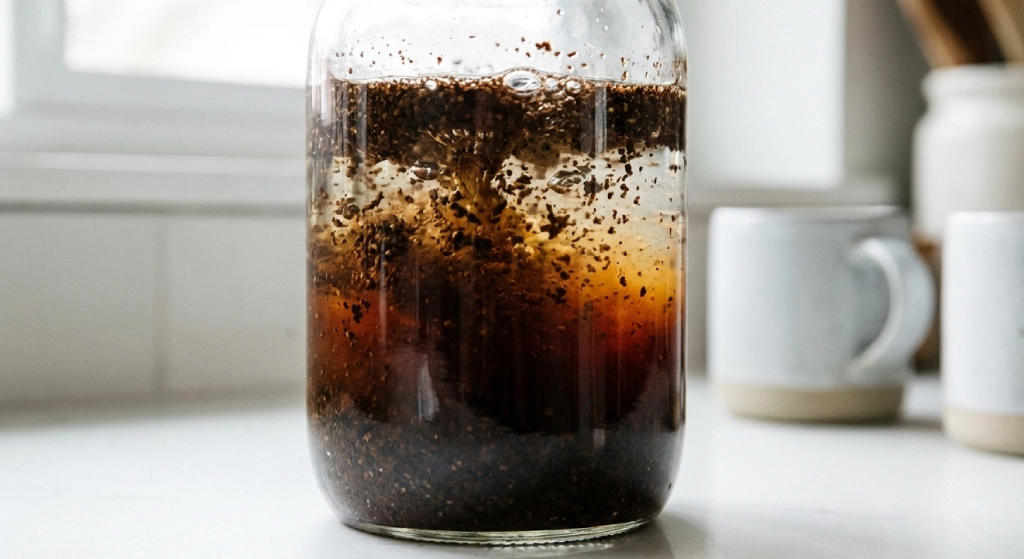
- Grind your coffee coarsely. It should look like sea salt or breadcrumbs — not fine like sand.
- Add grounds to your jar or French press.
- Pour cold filtered water over the grounds. Make sure all the coffee is saturated.
- Stir gently to break up any dry clumps floating on top.
- Cover the jar (lid, plastic wrap, or the French press plunger resting on top).
- Steep for 16 hours at room temperature or in the fridge.
- Strain (method below).
- Store the concentrate in a clean sealed jar in the fridge. It keeps well for up to 2 weeks.
To serve: fill a glass with ice, add 1 part concentrate and 2 parts water or milk. Adjust to taste.
Fridge vs Room Temperature
Both work. Here’s the difference:
Room temperature (around 20°C / 68°F) extracts a bit faster and gives a slightly richer, fuller flavor. Steep for 12–16 hours.
Fridge extracts more slowly and produces a cleaner, lighter taste. Steep for 16–20 hours.
If your kitchen is warm (above 25°C / 77°F), use the fridge to avoid any risk of spoilage. Otherwise, either works.
Don’t believe anyone who says cold brew must steep for 24 hours. Past 18 hours, most beans start pulling out woody, bitter notes. Sixteen hours is the sweet spot for most coffees.
How to Make Cold Brew Concentrate (and Dilute It)
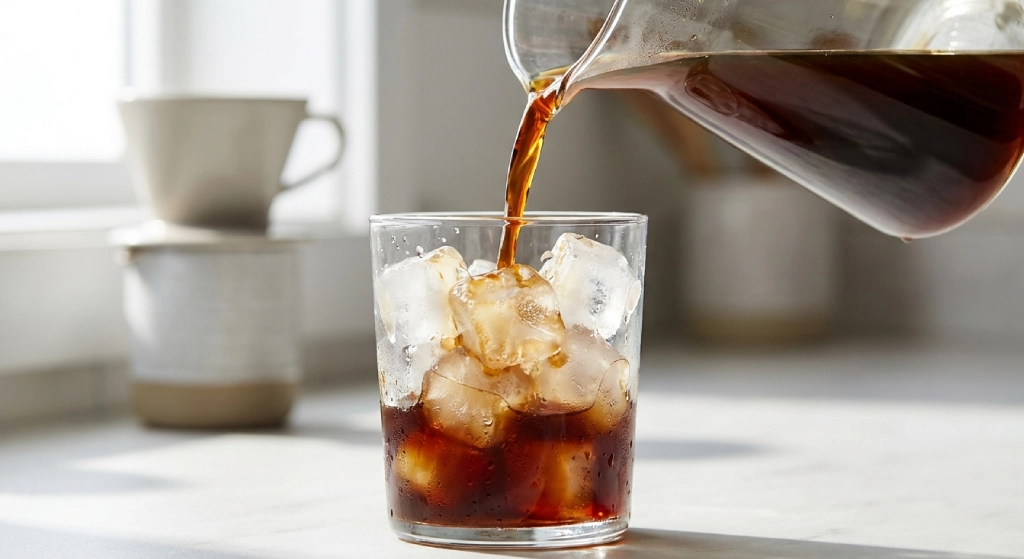
Concentrate is just cold brew made strong on purpose. The 1:5 ratio from earlier is concentrate — you don’t need a separate recipe.
To serve:
- Classic iced cold brew: 1 part concentrate + 2 parts water + ice
- Cold brew latte: 1 part concentrate + 2 parts milk + ice
- Stronger cup: 1 part concentrate + 1 part water
- Lighter cup: 1 part concentrate + 3 parts water
Keep in mind: ice melts. A full glass of ice will water your drink down as you sip. Start slightly stronger than you think you want.
Concentrate is also great for coffee cocktails, affogatos, or mixing into smoothies.
Best Grind Size for Cold Brew
Coarse. Always coarse.
The grounds should look like coarse sea salt or raw sugar — similar to what you’d use in a French press. Between your fingers, they should feel gritty, not powdery.
Why coarse matters:
- Fine grounds over-extract and turn bitter during the long steep.
- Fine grounds are hard to strain — they slip through filters and leave sludge at the bottom of your glass.
- Coarse grounds give a cleaner, sweeter flavor and strain easily.
If you don’t have a grinder, most coffee shops and grocery stores will grind beans for you — just ask for “coarse, French press grind.” In a pinch, you can check out how to grind coffee beans without a grinder for workarounds using a blender, rolling pin, or mortar and pestle.
Buying pre-ground? Look for bags labeled “coarse” or “French press.” Avoid “drip” or “espresso” grinds.
How to Strain Cold Brew Coffee
Straining is where good cold brew gets ruined. Go slow and don’t rush it.
Method 1: French press (easiest)
If you brewed directly in a French press, just press the plunger down slowly. Pour the liquid into a clean jar. Done. There’ll be a little fine sediment — that’s normal.
Method 2: Mesh strainer + paper filter (cleanest)
Set a fine mesh strainer over a jar or pitcher. Pour the cold brew through it to catch the grounds. Then line the strainer with a paper coffee filter and pour again for a crystal-clear result.
Don’t pour everything through a paper filter at once — it’ll clog in minutes and take hours to drip through. Mesh first, paper second.
A note on cheesecloth: It works, but it’s messy. The fabric is floppy, grounds slip through, and you usually need to double or triple it up. If you have a mesh strainer, use that instead.
Whatever method you use, don’t squeeze or press the grounds hard. That pushes bitter fines into your cold brew.
Common Cold Brew Mistakes (And How to Fix Them)
My cold brew is bitter. You probably used a grind that’s too fine or steeped too long. Go coarser and cut the steep to 14–16 hours.
It tastes weak and watery. Either the ratio was off (too much water) or you over-diluted. Try 1:5 brew and 1:2 dilution.
It’s cloudy and full of sediment. Grind too fine, or you pressed the French press too hard. Strain through a paper filter for a cleaner cup.
It tastes sour or grassy. Under-extracted. Try a slightly longer steep (18 hours) or a finer — but still coarse — grind.
It went bad quickly. Concentrate lasts up to 2 weeks in the fridge. Diluted cold brew lasts about 3–4 days. Always store in a sealed clean container.
Tips for Making Better Cold Brew
- Use filtered water. Tap water with heavy chlorine or minerals changes the flavor.
- Weigh your coffee and water. A cheap kitchen scale takes the guesswork out.
- Try different roasts. Medium roasts give fruity, bright cold brew. Dark roasts give chocolate and caramel notes.
- Batch it weekly. A large batch of concentrate in the fridge means no waiting on busy mornings.
- Label your jar with the date. Two weeks passes faster than you think.
- Save the grounds — they’re great for plants or exfoliating scrubs.
No Special Equipment? Easy Alternatives
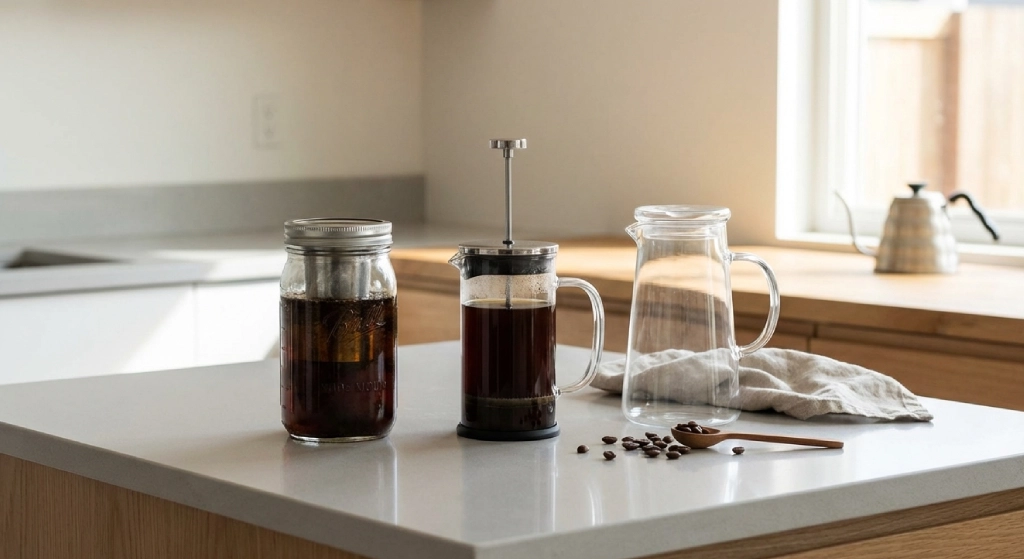
You don’t need a dedicated cold brew maker. Any of these work:
- Mason jar — the classic. Steep, then strain through mesh.
- French press — brewing and straining in one vessel.
- Pitcher — any large pitcher with a lid works for big batches.
- Large measuring jug — fine for a test run.
For large batch cold brew (feeding a household or prepping for the week), scale the 1:5 ratio up: 200g coffee to 1000g water, or 400g to 2000g. The math holds no matter how much you make.
Cold Brew Coffee FAQs
Not necessarily. Concentrate has more caffeine per ounce than hot coffee — but once you dilute it, caffeine content ends up similar to a regular cup. The “cold brew has more caffeine” idea usually compares undiluted concentrate to a normal coffee, which isn’t a fair match.
It tastes smoother and less acidic, yes. But the actual pH is often similar to hot coffee. The difference is in flavor, not chemistry — fewer bitter and sour compounds get extracted in cold water.
Concentrate keeps for up to 2 weeks in a sealed jar. Once diluted, drink within 3–4 days for the best taste.
That defeats the purpose. Heat pulls out the acidic and bitter compounds cold brew is designed to avoid. Stick to cold or room-temperature water.
Black cold brew has about 5 calories per cup. Add milk, sugar, or syrups and that number climbs quickly.
Yes, but medium to dark roasts usually taste best. Single-origin beans from Brazil, Colombia, or Sumatra are reliable starting points.
No. That’s a pour-over thing. Cold brew skips it.
Technically yes, but the second batch will be thin and flat. Better to compost them or toss them in the garden.
That’s coffee oils — normal and fine. Stir before pouring if it bothers you.
You can. Dilute concentrate with hot water for a smoother, less acidic hot coffee. It’s a nice trick if you have a sensitive stomach.
Final Thoughts
Cold brew rewards patience more than skill. Once you’ve got the ratio (1:5 for concentrate), the grind (coarse), and the time (16 hours) locked in, the rest is just repetition.
Start with the numbers in this guide. Taste the result. Adjust from there more coffee if it’s weak, shorter steep if it’s bitter. After two or three batches, you’ll know exactly how you like it.
The best part? A single jar of concentrate covers a whole week of iced coffees. Once you start making it at home, the café price tag stops making sense.
Related Articles

Share your coffee experience
Have you tried this product? Add a thoughtful review or ask a question.
One Response